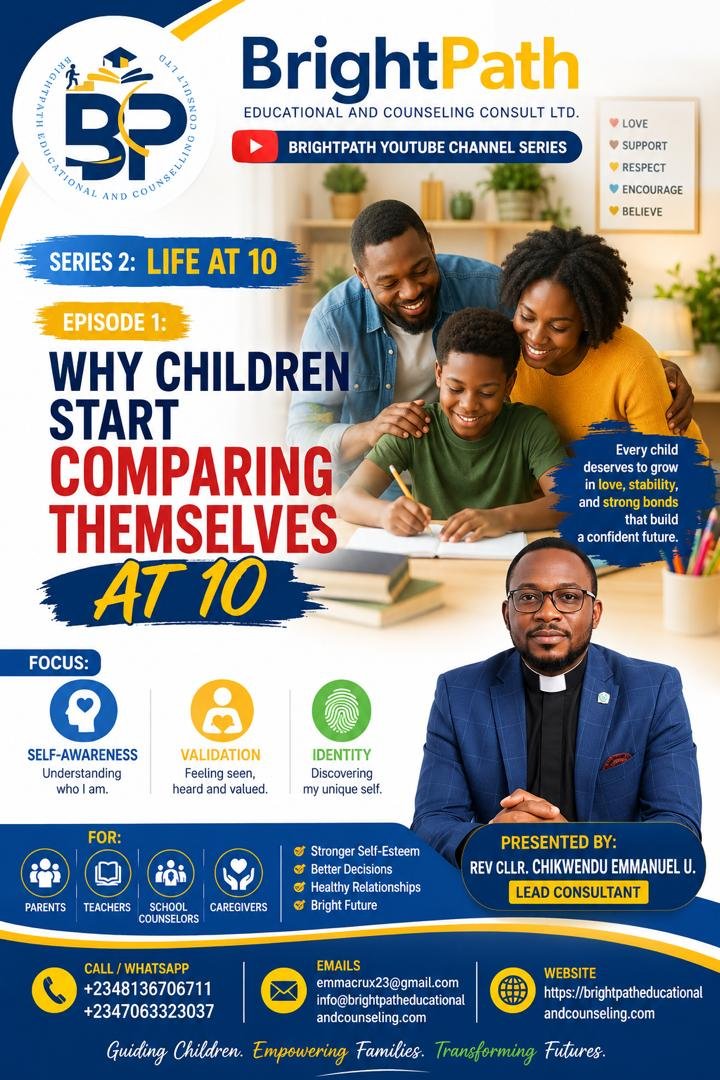
SERIES 2: LIFE AT 10. Episode 1: Why Children Start Comparing Themselves at 10

Around the age of 10, children become more aware of themselves and the people around them. They begin to notice differences in appearance, academic performance, talents, possessions, popularity, and family background. At this stage, comparison becomes a natural part of their social and psychological development. While healthy comparison can motivate growth, unhealthy comparison can damage self-esteem and confidence.
Three Necessary Focus Areas
- Understanding the Development of Self-Identity
Focus:
Helping parents, teachers, and counselors understand why comparison naturally emerges at this age.
Key Discussion Points:
- Children begin to develop a stronger sense of “Who am I?”
- Increased awareness of strengths and weaknesses.
- Greater sensitivity to peer opinions and acceptance.
- Desire to belong to friendship groups.
- Beginning of self-evaluation through comparison with classmates and siblings.
Practical Message:
Children at 10 are not necessarily becoming insecure; they are trying to understand their place in the world. Adults must guide them to discover their unique identity rather than measuring their worth against others.
Takeaway:
Every child develops differently, and comparison should never define personal value.
- The Impact of Social Comparison on Confidence and Emotional Well-being
Focus:
Examining how comparison affects children’s self-esteem, emotions, and behavior.
Key Discussion Points:
- Comparing academic performance.
- Comparing physical appearance.
- Comparing family possessions and social status.
- Comparing popularity and friendships.
- Feelings of inadequacy, jealousy, anxiety, or low self-worth that may arise.
Warning Signs:
- Frequent negative self-talk.
- Withdrawal from activities.
- Fear of failure.
- Excessive need for approval.
- Loss of confidence despite good abilities.
Practical Message:
When children repeatedly believe others are better than they are, they may begin to doubt their own abilities. Adults should help children appreciate progress rather than perfection.
Takeaway:
Confidence grows when children learn to value their own journey rather than competing with everyone else’s.
- Building Healthy Self-Worth Beyond Comparison
Focus:
Teaching children how to appreciate themselves while learning from others.
Key Discussion Points:
- Celebrating individual strengths and talents.
- Encouraging a growth mindset.
- Teaching gratitude and self-acceptance.
- Helping children set personal goals.
- Modeling healthy attitudes toward success and failure.
Practical Strategies:
- Praise effort rather than only results.
- Encourage children to track personal improvement.
- Avoid comparing siblings or classmates.
- Create opportunities for every child to experience success.
- Teach children that differences are normal and valuable.
Practical Message:
The goal is not to stop children from noticing differences but to help them understand that differences do not determine worth.
Takeaway:
Children thrive when they learn that their value comes from who they are, not from how they compare with others.
BrightPath Closing Reflection
“At age 10, children begin asking important questions about themselves. The answers they receive from parents, teachers, and caregivers shape their confidence for years to come. Instead of teaching children to compete for worth, let us teach them to discover their strengths, celebrate their uniqueness, and grow into confident individuals who appreciate both themselves and others.”
BrightPath Educational and Counselling Consult
Guiding Children, Empowering Families, Transforming Futures.