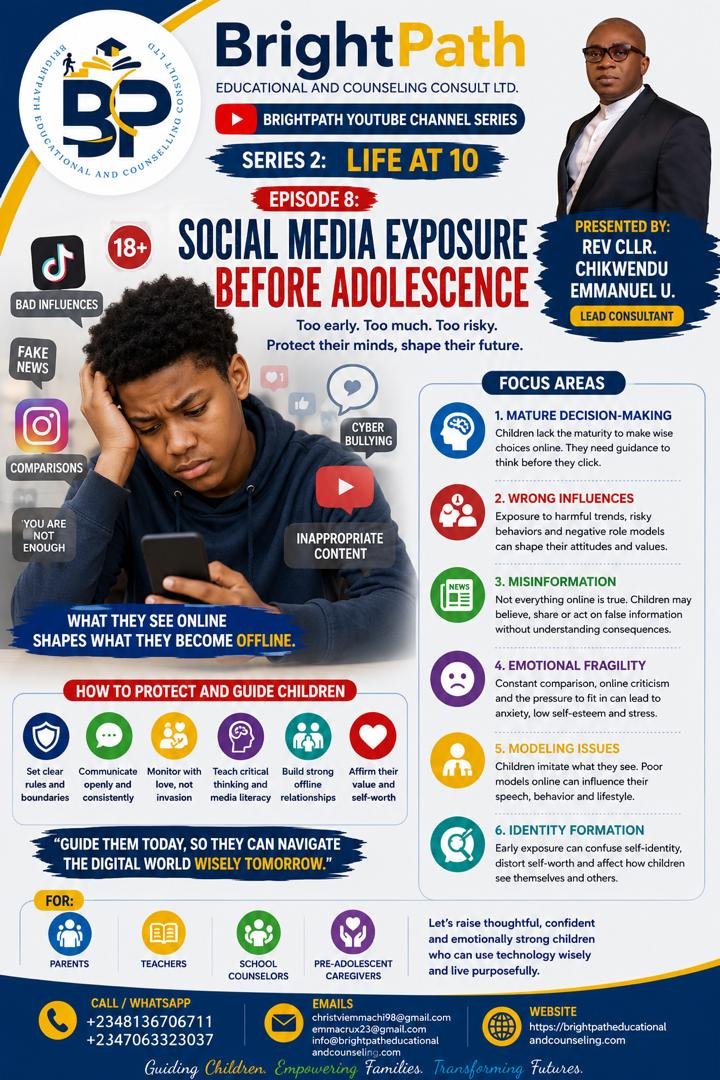
Life At 10, Episode 8: Social Media Exposure Before Adolescence

Today’s children are exposed to social media much earlier than previous generations. Before reaching adolescence, many children already interact with online content, influencers, short videos, gaming communities, and social networking platforms. While technology offers opportunities for learning and creativity, early social media exposure also presents significant developmental, emotional, and social risks.
This episode helps parents, teachers, and counselors understand how social media influences children’s thinking, emotions, identity formation, and decision-making before adolescence.
Focus Area 1: Developing Mature Decision-Making Skills
Key Question:
Why do children struggle to make wise decisions online?
Discussion Points:
- Children’s brains are still developing critical thinking skills.
- They may struggle to distinguish between good and harmful online content.
- Instant gratification can encourage impulsive choices.
- Peer influence often affects online behavior.
Teach Children:
✔️ Think before posting.
✔️ Verify information before believing it.
✔️ Understand online consequences.
✔️ Make choices based on values, not trends.
What Adults Can Do:
- Discuss online experiences regularly.
- Teach digital responsibility.
- Model healthy technology use.
- Encourage critical thinking.
Core Message:
Children need guidance to make wise online decisions because maturity develops gradually.
Focus Area 2: Wrong Influences and Negative Peer Pressure
Key Question:
How can social media expose children to harmful influences?
Discussion Points:
- Exposure to inappropriate behaviors and language.
- Pressure to imitate influencers.
- Glorification of risky or unhealthy lifestyles.
- Desire for online popularity and validation.
- Increased vulnerability to peer pressure.
Warning Signs:
- Sudden behavioral changes.
- Excessive concern about online approval.
- Copying inappropriate trends.
- Secretive internet usage.
Protective Strategies:
✔️ Monitor online activities appropriately.
✔️ Encourage open conversations.
✔️ Teach children how to resist unhealthy influences.
✔️ Promote positive role models.
Core Message:
Not every trend deserves to be followed, and not every influencer deserves to be imitated.
Focus Area 3: Misinformation and Digital Deception
Key Question:
Why is misinformation dangerous for children?
Discussion Points:
- Children may believe false information without verification.
- Fake news spreads rapidly online.
- Manipulative content can distort reality.
- Children may struggle to identify credible sources.
Teach Children:
✔️ Ask questions.
✔️ Verify facts.
✔️ Avoid sharing unconfirmed information.
✔️ Seek guidance when uncertain.
What Adults Can Do:
- Teach media literacy.
- Explain how misinformation spreads.
- Encourage healthy skepticism.
Core Message:
Being informed is not the same as being exposed to information; children must learn how to evaluate what they see.
Focus Area 4: Emotional Fragility and Mental Well-Being
Key Question:
How does social media affect children’s emotions?
Discussion Points:
- Constant comparison can reduce self-esteem.
- Fear of missing out (FOMO).
- Dependence on likes and online validation.
- Increased anxiety about appearance and popularity.
- Emotional sensitivity to online criticism.
Possible Effects:
✔️ Low self-confidence.
✔️ Anxiety and stress.
✔️ Feelings of inadequacy.
✔️ Emotional instability.
✔️ Social withdrawal.
What Adults Can Do:
- Build children’s self-worth offline.
- Encourage real-life relationships.
- Promote balanced screen usage.
- Create emotionally supportive environments.
Core Message:
Children who know their value offline are less likely to seek validation online.
Focus Area 5: Modeling Issues and Identity Formation
Key Question:
Who is teaching children how to live?
Discussion Points:
- Children naturally imitate people they admire.
- Social media influencers often become role models.
- Not all online personalities model healthy values.
- Identity development can be influenced by unrealistic lifestyles.
Teach Children:
✔️ Choose role models wisely.
✔️ Value character over popularity.
✔️ Appreciate authenticity.
✔️ Stay true to personal values.
Positive Models Should Demonstrate:
- Integrity.
- Responsibility.
- Respect.
- Kindness.
- Self-discipline.
Core Message:
Children become what they repeatedly admire and imitate.
Practical Takeaways for Parents, Teachers, and Counselors
Help Children Learn:
✔️ Social media is a tool, not a substitute for real life.
✔️ Not everything online is true.
✔️ Personal worth is not measured by likes or followers.
✔️ Critical thinking is essential online.
✔️ Real relationships matter more than virtual popularity.
✔️ Healthy boundaries should exist around technology use.
BrightPath Reflection
“Before adolescence, children are still developing the emotional and cognitive skills needed to navigate the digital world wisely. Social media can educate, inspire, and connect, but it can also mislead, pressure, and distort reality. The responsibility of parents, teachers, and counselors is not simply to restrict technology but to teach children how to use it responsibly, critically, and safely. When children develop strong values, healthy self-esteem, and sound judgment, they become better prepared to navigate the digital age with confidence and wisdom.”