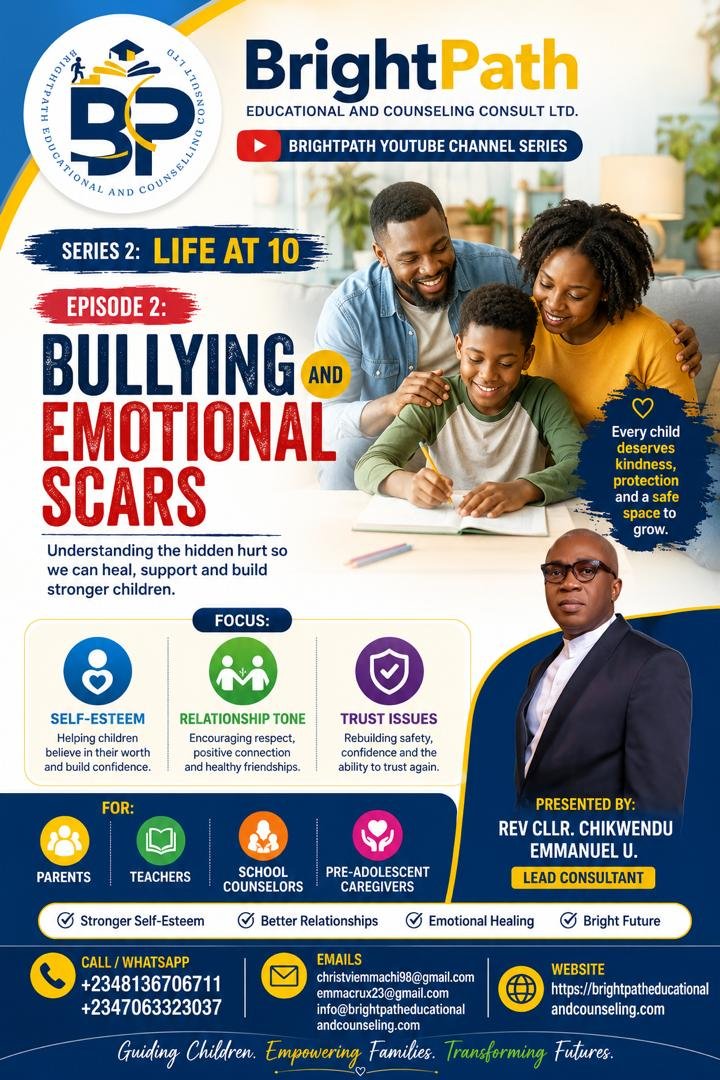
Life At 10, Episode 2: Bullying and Emotional Scars

At around age 10, children become increasingly aware of peer acceptance, social status, and group belonging. Unfortunately, this is also a period when bullying often begins to intensify. While physical injuries may heal quickly, the emotional scars left by bullying can affect a child’s confidence, relationships, academic performance, and mental well-being for many years.
This episode explores how bullying shapes a child’s self-esteem, influences their relationships with others, and creates lasting trust issues if not properly addressed.
Focus Area 1: Self-Esteem – When Bullying Attacks a Child’s Sense of Worth
Key Question:
How does bullying affect the way children see themselves?
Discussion Points:
- Bullying often causes children to question their value and abilities.
- Repeated insults, ridicule, exclusion, or humiliation can become internalized.
- Victims may begin to believe the negative messages they hear.
- Academic confidence and participation may decline.
- Children may stop pursuing activities they once enjoyed.
Warning Signs:
- Frequent self-criticism.
- Fear of speaking in class.
- Social withdrawal.
- Declining academic performance.
- Increased anxiety and sadness.
What Adults Can Do:
- Offer consistent encouragement and emotional support.
- Celebrate strengths and achievements.
- Correct negative self-talk immediately.
- Create safe spaces where children feel heard and valued.
Core Message:
A child who believes in their worth becomes more resilient against the harmful effects of bullying.
Focus Area 2: Relationship Tone – How Bullying Shapes Future Interactions
Key Question:
How does bullying influence the way children relate with others?
Discussion Points:
- Children often learn relationship patterns from peer experiences.
- Victims may become fearful, defensive, or socially withdrawn.
- Some children may imitate bullying behaviors toward others.
- Healthy friendships become difficult when children anticipate rejection.
- Negative peer experiences can shape future social interactions.
Consequences:
- Difficulty making friends.
- Fear of group activities.
- Aggressive or avoidant behavior.
- Reduced participation in school activities.
What Adults Can Do:
- Teach empathy and respect.
- Encourage positive peer relationships.
- Promote inclusive classroom and home environments.
- Help children develop conflict-resolution skills.
Core Message:
Children who experience kindness and acceptance learn to build healthier relationships with others.
Focus Area 3: Trust Issues – The Hidden Emotional Scar
Key Question:
Why do bullied children sometimes struggle to trust others?
Discussion Points:
- Bullying often comes from peers whom children expected to be friends.
- Betrayal and exclusion can weaken a child’s sense of safety.
- Children may become suspicious of others’ intentions.
- Fear of being hurt again can prevent meaningful connections.
- Trust issues may continue into adolescence and adulthood.
Signs of Trust Difficulties:
- Reluctance to make friends.
- Excessive fear of criticism.
- Difficulty opening up emotionally.
- Constant expectation of rejection.
What Adults Can Do:
- Listen without judgment.
- Take reports of bullying seriously.
- Maintain consistency and reliability.
- Help children rebuild confidence in safe relationships.
Core Message:
Trust grows when children experience adults and peers who are dependable, caring, and respectful.
Practical Takeaways for Parents, Teachers, and Counselors
Teach Children:
✔️ Their worth is not determined by others’ opinions.
✔️ Seeking help is a sign of strength, not weakness.
✔️ Healthy friendships are built on respect and kindness.
✔️ Bullying says more about the bully’s behavior than the victim’s value.
✔️ Every child deserves safety, dignity, and belonging.
BrightPath Closing Reflection
“The deepest wounds from bullying are often invisible. Words, exclusion, and humiliation can leave emotional scars that shape how children see themselves and relate to others. When adults respond with understanding, protection, and guidance, those scars do not have to define a child’s future. Every child deserves to grow in an environment where respect replaces fear, confidence replaces shame, and trust replaces isolation.”