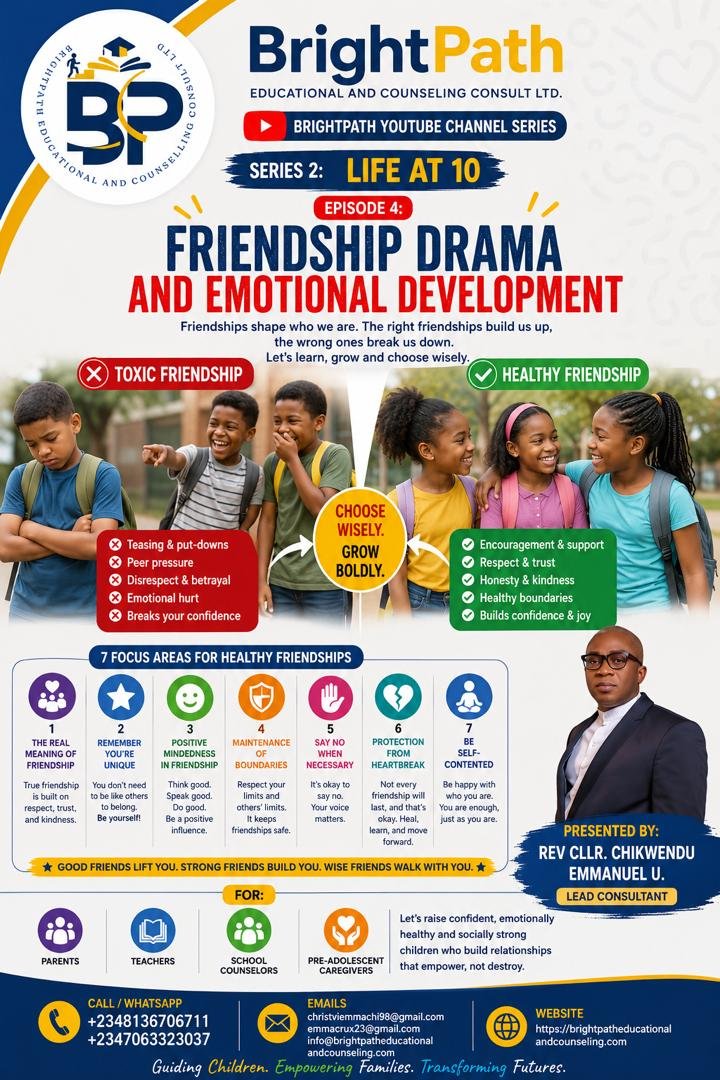
Life At 10, Episode 4: Friendship Drama and Emotional Development

At age 10, friendships become increasingly important. Children begin to seek acceptance, belonging, loyalty, and emotional support from their peers. However, this stage also introduces friendship conflicts, exclusion, misunderstandings, peer pressure, and emotional disappointments.
Many children experience their first friendship drama at this age. How they handle these experiences can influence their self-esteem, emotional intelligence, social skills, and future relationships.
This episode helps children understand what healthy friendships look like while teaching them how to protect their emotional well-being.
Focus Area 1: The Real Meaning of Friendship
Key Question:
What makes someone a true friend?
Discussion Points:
- Friendship is built on respect, trust, kindness, and honesty.
- True friends support rather than compete destructively.
- Friendship is not based on popularity, gifts, or status.
- Healthy friends celebrate one another’s successes.
- Genuine friendship helps people grow.
Teach Children:
✔️ Friends should make you feel valued.
✔️ Friends should respect your feelings.
✔️ Friendship involves giving and receiving support.
✔️ A good friend does not constantly put others down.
Core Message:
Friendship is not about having many friends; it is about having healthy and meaningful relationships.
Focus Area 2: Remember You Are Unique
Key Question:
Why should children avoid losing themselves in friendships?
Discussion Points:
- Every child has unique talents, strengths, and interests.
- Children sometimes change who they are just to fit in.
- Seeking approval from friends can weaken self-confidence.
- Healthy friendships allow individuality.
What Children Need to Learn:
- It is okay to be different.
- You do not need to copy others to belong.
- Your value does not depend on peer approval.
- Confidence grows when you appreciate your uniqueness.
Core Message:
The best friendships allow you to be yourself without fear of rejection.
Focus Area 3: Positive-Mindedness in Friendship
Key Question:
How can children contribute positively to friendships?
Discussion Points:
- Positive friends encourage and uplift one another.
- Words have power to build or destroy relationships.
- Gratitude strengthens friendships.
- Forgiveness and understanding help friendships grow.
Practical Skills:
- Speaking kindly.
- Celebrating others’ achievements.
- Resolving conflicts respectfully.
- Avoiding gossip and rumors.
Core Message:
Positive friendships create positive emotional growth.
Focus Area 4: Maintenance of Healthy Boundaries
Key Question:
Why are boundaries important in friendship?
Discussion Points:
- Every child deserves personal space and respect.
- Good friends respect limits and personal choices.
- Boundaries help prevent manipulation and unhealthy peer pressure.
- Children should feel safe expressing discomfort.
Teach Children:
✔️ Respect your own feelings.
✔️ Respect others’ limits.
✔️ Do not allow anyone to pressure you into wrongdoing.
✔️ Healthy friendships honor personal boundaries.
Core Message:
Boundaries protect friendships and protect emotional well-being.
Focus Area 5: Learning to Say No When Necessary
Key Question:
Why is saying “No” an important friendship skill?
Discussion Points:
- Friends may sometimes encourage unhealthy behaviors.
- Fear of rejection can make children agree to things they dislike.
- Assertiveness helps children make responsible choices.
Practical Examples:
- Saying no to cheating.
- Saying no to bullying another child.
- Saying no to unsafe activities.
- Saying no to peer pressure.
Core Message:
Real friends respect your right to say no.
Focus Area 6: Protection from Heartbreak and Disappointment
Key Question:
How can children cope when friendships change or end?
Discussion Points:
- Not all friendships last forever.
- Friendship disagreements are normal.
- Rejection does not define personal worth.
- Emotional disappointments can teach valuable life lessons.
What Adults Can Do:
- Listen without judgment.
- Validate children’s feelings.
- Teach healthy coping skills.
- Encourage resilience and emotional recovery.
Core Message:
Friendship disappointments may hurt, but they can also help children become emotionally stronger.
Focus Area 7: Learning to Be Self-Contented
Key Question:
Why is self-contentment important in friendship?
Discussion Points:
- Happiness should not depend entirely on others.
- Children who value themselves are less vulnerable to unhealthy relationships.
- Self-contentment promotes emotional stability.
- Confidence grows from self-acceptance.
Teach Children:
✔️ Enjoy your own company.
✔️ Appreciate your strengths.
✔️ Develop personal interests and hobbies.
✔️ Know that your worth is not determined by popularity.
Core Message:
The healthiest friendships are formed by individuals who already value themselves.
Practical Takeaways for Parents, Teachers, and Counselors
Help Children Learn:
- What healthy friendship looks like.
- How to communicate respectfully.
- How to handle conflicts peacefully.
- How to maintain personal boundaries.
- How to recover from disappointments.
- How to remain confident and authentic.
BrightPath Closing Reflection
“At age 10, friendships begin to shape a child’s emotional world in powerful ways. Through friendships, children learn trust, empathy, communication, and self-worth. When guided properly, friendship challenges become opportunities for growth. The goal is not simply to help children make friends, but to help them develop healthy relationships while remaining confident, emotionally balanced, and true to themselves.”