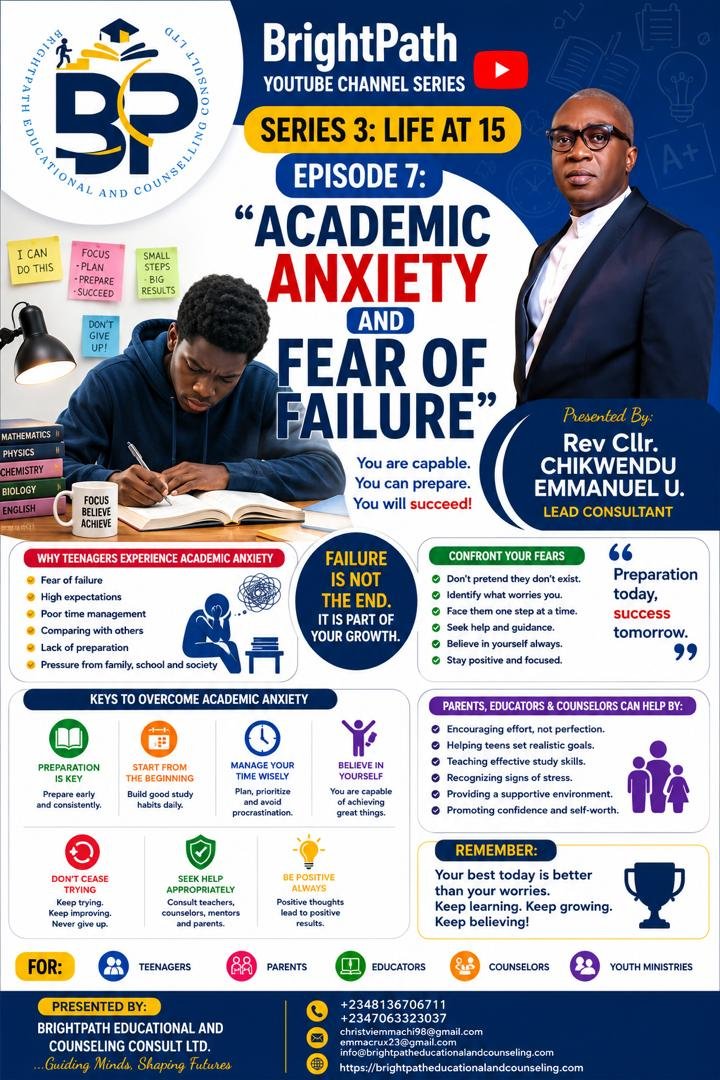
Life At 15, Episode 7: Academic Anxiety and Fear of Failure

Every teenager wants to succeed, yet many live with a hidden fear—the fear of failing examinations, disappointing parents, falling behind peers, or not achieving their dreams.
A certain level of anxiety before tests or important academic tasks is normal. However, when anxiety becomes overwhelming, it can reduce concentration, lower confidence, and even affect performance.
The good news is that academic success is not built on fear but on preparation, perseverance, and a positive mindset. Failure is not the end of the journey; it is often a stepping stone to greater growth and achievement.
What Is Academic Anxiety?
Academic anxiety is the excessive worry, fear, or nervousness related to schoolwork, examinations, assignments, or academic expectations.
A teenager experiencing academic anxiety may:
- Constantly fear failure.
- Panic before examinations.
- Doubt their abilities.
- Avoid studying because they feel overwhelmed.
- Feel pressure to meet unrealistic expectations.
When managed well, anxiety can motivate preparation. When unmanaged, it can become a barrier to success.
Why Do Teenagers Experience Academic Anxiety?
Common causes include:
- Fear of Failure
Many teenagers believe that one poor result determines their future.
In reality, one setback does not define a person’s potential.
- High Expectations
Pressure may come from:
- Parents
- Teachers
- Friends
- Society
- Personal expectations
While encouragement is healthy, unrealistic expectations can become emotionally exhausting.
- Poor Preparation
Lack of preparation often increases anxiety.
Confidence grows when preparation improves.
- Comparing Yourself with Others
Constant comparison creates unnecessary pressure.
Every student learns differently and progresses at a different pace.
- Poor Time Management
Waiting until the last minute often leads to:
- Stress
- Panic
- Poor sleep
- Reduced confidence
Good planning reduces unnecessary pressure.
Preparation Is the Key to Confidence
Success begins long before examination day.
Effective preparation includes:
- Paying attention in class.
- Reviewing lessons daily.
- Asking questions when confused.
- Completing assignments promptly.
- Practicing past questions.
- Revising consistently.
Preparation transforms fear into confidence.
Start from the Beginning
Do not wait until examinations are near before studying.
Develop the habit of learning continuously.
Small daily efforts produce remarkable long-term results.
Remember:
Little progress every day leads to significant achievement over time.
Time Management Matters
Time is one of the greatest resources available to every student.
Good time management involves:
- Creating a study timetable.
- Prioritizing important tasks.
- Avoiding procrastination.
- Balancing study with rest.
- Limiting unnecessary screen time.
Managing time wisely reduces academic pressure.
Believe in Yourself
Confidence is built through:
- Preparation
- Practice
- Positive thinking
- Persistence
Instead of saying:
“I can’t do it.”
Say:
“I can learn.”
“I can improve.”
“I will keep trying.”
Self-belief encourages resilience during difficult moments.
Never Stop Trying
Many successful people experienced failure before achieving success.
Failure is:
- Feedback.
- A learning opportunity.
- A chance to improve.
Never allow one disappointment to end your dreams.
Persistence often separates successful people from those who give up too soon.
Confront Your Fears
Fear becomes stronger when we avoid it.
Instead of pretending anxiety does not exist:
- Identify what worries you.
- Prepare for it.
- Seek help when needed.
- Practice regularly.
- Face challenges one step at a time.
Courage is not the absence of fear.
Courage is moving forward despite fear.
Seek Help When Necessary
There is wisdom in asking for help.
Consult:
- Teachers
- Parents
- School counselors
- Mentors
- Tutors
- Trusted adults
Seeking guidance demonstrates responsibility—not weakness.
Maintain a Positive Mindset
Positive thinking does not ignore challenges.
It chooses hope while working hard.
Daily affirmations include:
- I am capable of learning.
- I improve every day.
- Mistakes help me grow.
- I will give my best effort.
- My future is brighter than my fears.
How Parents Can Help
Parents should:
- Encourage effort more than perfection.
- Avoid unhealthy comparisons.
- Celebrate progress.
- Provide emotional support.
- Create a peaceful study environment.
Children thrive when they feel supported rather than pressured.
How Teachers and Counselors Can Help
Teachers and counselors should:
- Teach effective study skills.
- Encourage realistic goal setting.
- Recognize signs of academic stress.
- Promote confidence.
- Offer emotional support before examinations.
The BrightPath SUCCESS Formula
S – Start Early
Don’t wait until examinations are near.
U – Use Time Wisely
Plan your study schedule.
C – Confront Your Fears
Face challenges with courage.
C – Continue Learning
Every mistake teaches something valuable.
E – Encourage Yourself
Speak positively about your abilities.
S – Seek Help
Ask questions whenever necessary.
S – Stay Persistent
Never give up after one setback.
BrightPath Takeaway
Academic success is not reserved for students who never fail. It belongs to those who prepare consistently, manage their time wisely, believe in themselves, seek help when needed, and keep trying despite setbacks.
Every challenge is an opportunity to learn, improve, and grow stronger. Fear loses its power when it is met with preparation, perseverance, and a positive attitude.
Remember:
“Preparation builds confidence. Confidence reduces fear. Persistence creates success. Never let the fear of failure stop you from becoming the person you were created to be.”