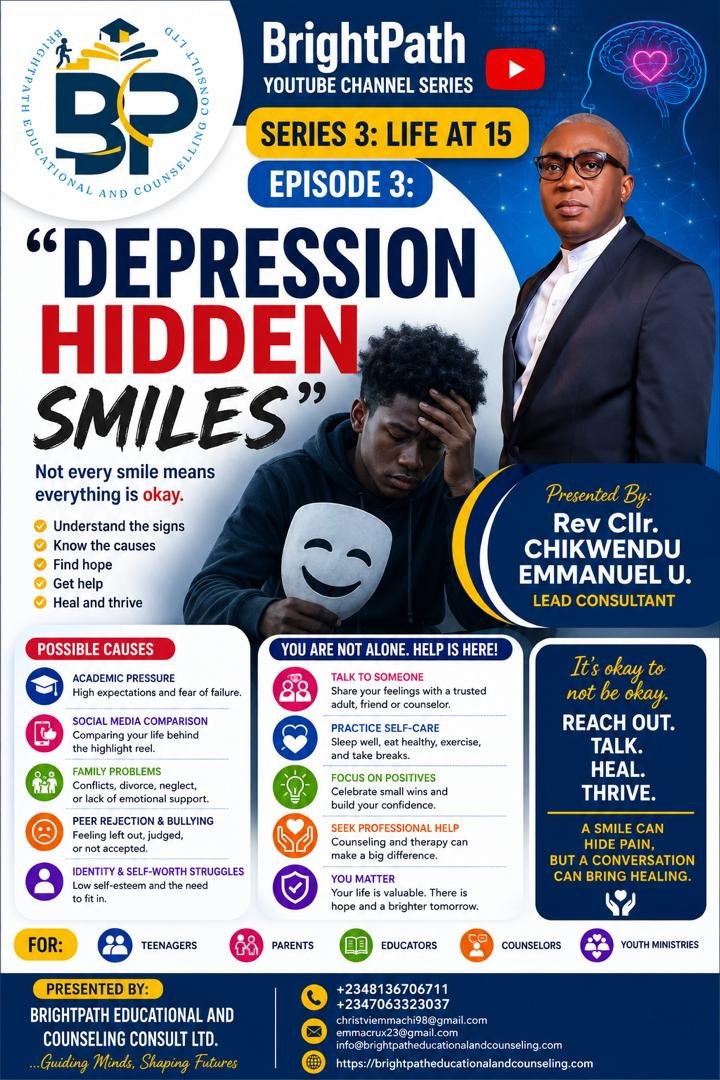
Life At 15, Episode 3: Depression Hidden Behind Smiles

Not every smiling teenager is happy.
One of the greatest misconceptions about depression is that it always looks like sadness, tears, or isolation. In reality, many teenagers who struggle with depression continue to smile, attend school, participate in activities, post cheerful pictures online, and interact with friends while silently carrying emotional pain.
This hidden form of depression often goes unnoticed because the teenager appears “fine” on the outside while struggling internally.
Understanding the warning signs, causes, prevention strategies, and available support can help save lives and improve emotional wellbeing.
What Is Teenage Depression?
Teenage depression is more than occasional sadness or mood swings.
It is a persistent emotional condition that affects how a young person:
- Thinks
- Feels
- Behaves
- Relates to others
- Performs academically
- Views themselves and their future
Depression can affect teenagers from all backgrounds regardless of intelligence, family status, academic achievement, or religious involvement.
Why Is Depression Often Hidden Behind Smiles?
Many teenagers hide their struggles because they fear:
- Being judged
- Being misunderstood
- Appearing weak
- Disappointing their parents
- Becoming a burden to others
- Being labeled negatively
As a result, they often learn to wear emotional masks.
Behind the smile may be:
- Loneliness
- Anxiety
- Emotional exhaustion
- Hopelessness
- Low self-worth
Possible Causes of Teenage Depression
Depression rarely results from one factor alone. It is often influenced by a combination of experiences and circumstances.
- Academic Pressure
Many teenagers face enormous pressure to:
- Pass examinations
- Meet family expectations
- Gain admission into desired schools
- Compete with peers
Persistent academic stress can affect emotional wellbeing.
- Family Problems
Examples include:
- Frequent parental conflict
- Divorce or separation
- Neglect
- Harsh parenting
- Loss of a loved one
- Financial difficulties
Family instability can significantly impact a teenager’s emotional health.
- Social Media Comparison
Constant exposure to carefully edited online lives can make teenagers feel:
- Inadequate
- Unattractive
- Unsuccessful
- Unimportant
Many begin comparing their real lives with other people’s highlight reels.
- Peer Rejection and Bullying
Experiences such as:
- Bullying
- Social exclusion
- Rejection
- Humiliation
can deeply affect self-esteem and emotional stability.
- Identity and Self-Worth Struggles
Teenagers often wrestle with questions such as:
- Who am I?
- Do I matter?
- Am I good enough?
- Where do I belong?
When these questions remain unresolved, emotional distress may increase.
- Traumatic Experiences
Examples include:
- Abuse
- Neglect
- Violence
- Major losses
- Serious accidents
Trauma can leave lasting emotional wounds.
Warning Signs That May Be Hidden Behind Smiles
A teenager may appear cheerful yet still experience depression.
Possible indicators include:
Emotional Signs
- Persistent sadness
- Irritability
- Feelings of emptiness
- Frequent crying when alone
- Loss of hope
Behavioral Signs
- Withdrawal from activities
- Reduced motivation
- Increased screen time
- Changes in friendships
- Avoiding conversations
Academic Signs
- Declining grades
- Poor concentration
- Lack of interest in school
Physical Signs
- Fatigue
- Sleep difficulties
- Changes in appetite
- Frequent headaches
- Unexplained body pains
Possible Prevention and Avoidance Strategies
While not all depression can be prevented, protective habits can reduce emotional vulnerability.
- Build Strong Relationships
Healthy relationships provide:
- Support
- Encouragement
- Belonging
- Emotional safety
Teenagers need trusted people they can talk to.
- Reduce Harmful Comparison
Teach teenagers that:
- Social media is not real life.
- Everyone has struggles.
- Personal growth matters more than popularity.
- Develop Healthy Coping Skills
Encourage:
- Exercise
- Creative activities
- Journaling
- Prayer and spiritual reflection
- Positive hobbies
- Maintain Balanced Technology Use
Healthy digital habits include:
- Limiting excessive screen time
- Taking social media breaks
- Prioritizing real-life relationships
- Promote Emotional Literacy
Teenagers should learn to:
- Identify feelings
- Express emotions appropriately
- Seek help when needed
Personal Management for Teenagers
When feeling emotionally overwhelmed:
Talk to Someone
Speak with:
- Parents
- Counselors
- Teachers
- Mentors
- Trusted adults
Sharing struggles often reduces emotional burden.
Practice Self-Care
Prioritize:
- Adequate sleep
- Physical activity
- Healthy eating
- Relaxation
Challenge Negative Thoughts
Ask:
- Is this thought completely true?
- What evidence supports it?
- What would I tell a friend experiencing this?
Focus on Strengths
Remember:
- Your value is not determined by likes or followers.
- Your worth is not based solely on grades.
- Your identity is bigger than your current struggles.
Stay Connected
Isolation often increases emotional distress.
Remain connected to:
- Family
- Friends
- Faith communities
- Positive social groups
How Can Parents, Teachers, and Counselors Assist?
Parents
- Listen without judgment.
- Spend quality time together.
- Notice behavioral changes.
- Create emotional safety at home.
Teachers
- Observe changes in behavior and performance.
- Encourage struggling students.
- Refer concerns appropriately.
Counselors
- Provide professional support.
- Teach coping skills.
- Strengthen resilience and self-esteem.
- Facilitate emotional expression.
Faith and Youth Leaders
- Create supportive environments.
- Promote hope and belonging.
- Encourage healthy relationships and mentorship.
The BrightPath Emotional Wellness Check
When facing emotional challenges, ask:
- Am I carrying this burden alone?
- Have I talked to someone I trust?
- Am I taking care of my physical health?
- Am I comparing myself too much to others?
- What positive step can I take today?
Small positive actions often lead to meaningful emotional improvement.
BrightPath Takeaway
Many teenagers smile while silently struggling. Depression does not always announce itself loudly. Sometimes it hides behind good grades, social activity, laughter, and seemingly normal behavior.
The solution begins with awareness, understanding, compassionate listening, and timely support.
Every teenager deserves to know that asking for help is a sign of strength, not weakness.
Remember:
“A smile may hide pain, but a caring conversation can reveal hope.”