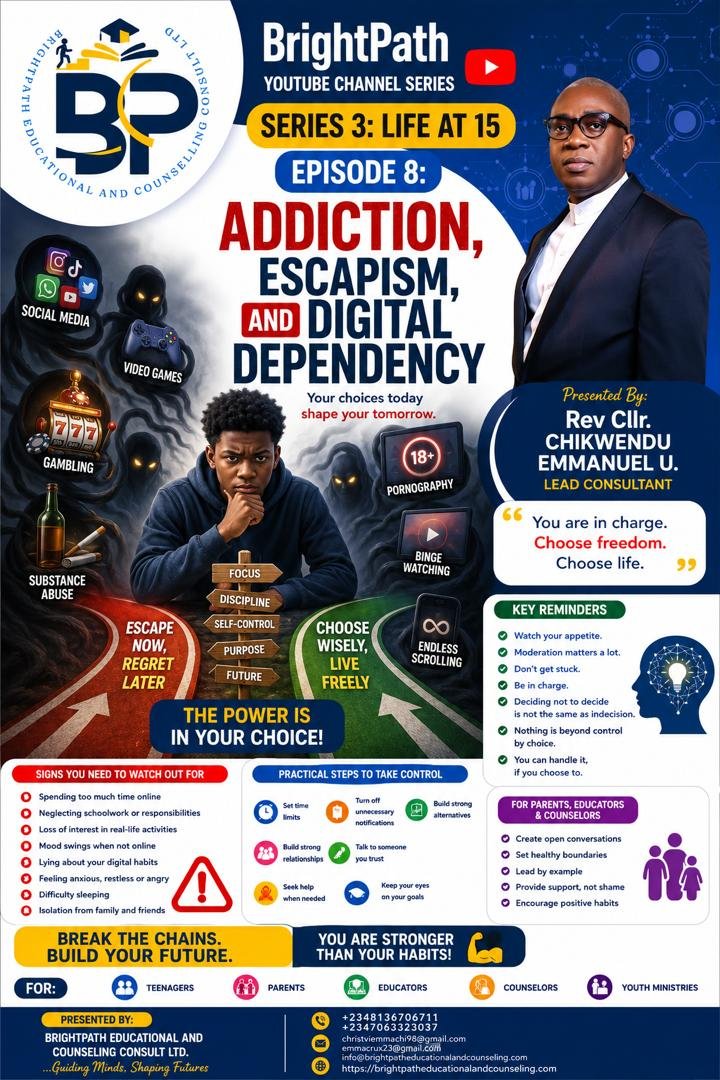
Life At 15, Episode 8: Addiction, Escapism, and Digital Dependency

Today’s teenagers are growing up in a digital world filled with endless entertainment, social media, gaming, streaming platforms, and instant gratification. While technology is a powerful tool for learning and communication, it can also become a trap when used without self-control.
Many teenagers do not become addicted overnight. It often begins with “just a little more time,” which gradually becomes a habit, then dependence, and eventually a struggle to stop.
The encouraging truth is this: Every healthy choice begins with one decision. You are stronger than your habits, and with determination and support, you can regain control.
What Is Addiction?
Addiction is the repeated use of a behavior or substance despite knowing that it is causing harm.
Teenagers may become addicted to:
- Social media
- TikTok and endless scrolling
- Video games
- Pornography
- Gambling
- Alcohol or drugs
- Smoking or vaping
- Excessive internet use
- Online shopping
- Food or unhealthy eating habits
Addiction gradually steals freedom by making a person feel unable to stop.
What Is Escapism?
Escapism is avoiding life’s challenges by constantly distracting yourself.
Instead of dealing with stress, disappointment, loneliness, or fear, a teenager may hide inside:
- Endless videos
- Online games
- Social media
- Movies
- Fantasy worlds
- Substance use
Temporary escape does not solve real-life problems.
What Is Digital Dependency?
Digital dependency occurs when someone becomes emotionally or psychologically dependent on digital devices.
Signs include:
- Feeling anxious without your phone.
- Constantly checking notifications.
- Losing track of time online.
- Ignoring family or friends.
- Sleeping late because of screen use.
- Difficulty concentrating without digital stimulation.
Technology should serve you—not control you.
Why Teenagers Become Addicted
Several factors increase vulnerability:
- Curiosity
Trying something “just once.”
- Peer Pressure
Following friends without thinking independently.
- Stress
Using entertainment to avoid emotional pain.
- Loneliness
Seeking comfort through digital connections.
- Boredom
Using screens simply because there is nothing else planned.
- Low Self-Esteem
Searching for validation through likes, followers, or online attention.
Watch Your Appetite
Every habit begins with an appetite.
Ask yourself:
- What am I constantly craving?
- What occupies my thoughts?
- What controls my attention?
Healthy appetites produce healthy habits.
Uncontrolled appetites often produce unhealthy lifestyles.
Moderation Matters
Technology is not the enemy.
Lack of balance is.
Healthy moderation includes:
- Limiting screen time.
- Prioritizing study before entertainment.
- Spending time outdoors.
- Reading books.
- Exercising.
- Building real-life friendships.
- Spending quality time with family.
Balance protects your emotional and mental health.
Don’t Get Stuck
Many addictions begin as choices but later begin making choices for the individual.
Never believe:
“I can’t stop.”
Instead say:
“I can stop, one step at a time.”
Freedom begins the moment you decide to fight.
Be in Charge
Self-control is one of the greatest life skills.
Ask yourself before acting:
- Is this helping me?
- Is this hurting me?
- Am I choosing this?
- Or is it choosing me?
Wise decisions today build a stronger future tomorrow.
Deciding Not to Decide Is Still a Decision
Many teenagers delay making healthy choices.
They say:
- “I’ll stop later.”
- “I’ll think about it tomorrow.”
- “Everyone is doing it.”
But delaying change often allows unhealthy habits to grow stronger.
Every day you choose not to act, you are still making a choice.
Choose wisely.
Nothing Is Beyond Control
Some teenagers believe:
“I’m already too addicted.”
That is rarely true.
Recovery is possible.
People overcome addiction every day through:
- Personal determination.
- Professional counseling.
- Family support.
- Healthy friendships.
- Positive routines.
- Faith and hope.
Never underestimate the power of one determined decision.
You Can Handle It—If You Choose To
Change begins with responsibility.
You cannot control everything around you.
But you can control:
- Your choices.
- Your habits.
- Your attitude.
- Your priorities.
- Your daily routines.
Self-control grows through daily practice.
Practical Steps Toward Freedom
- Recognize unhealthy habits honestly.
- Set daily screen-time limits.
- Remove unnecessary temptations.
- Replace unhealthy habits with productive activities.
- Build healthy friendships.
- Stay physically active.
- Pray, reflect, and develop inner discipline.
- Seek counseling if necessary.
- Celebrate every small victory.
Progress matters more than perfection.
How Parents Can Help
Parents should:
- Model healthy digital habits.
- Spend quality time with teenagers.
- Encourage offline hobbies.
- Listen without harsh judgment.
- Set healthy digital boundaries.
- Recognize signs of addiction early.
Support changes behavior better than constant criticism.
How Teachers and Counselors Can Help
Teachers and counselors should:
- Educate students about digital wellness.
- Identify early warning signs.
- Encourage balanced lifestyles.
- Teach coping skills.
- Provide emotional support and counseling.
BrightPath SUCCESS Formula
S – Self-Control
Learn to master your desires.
M – Moderation
Balance technology with real life.
A – Accountability
Take responsibility for your choices.
R – Replace
Exchange unhealthy habits for productive ones.
T – Take Charge
Lead your life intentionally.
BrightPath Takeaway
Technology is a wonderful servant but a poor master. Your future should never be controlled by your phone, your cravings, or unhealthy habits. Real strength is found in self-control, wise choices, and the courage to seek help when needed.
You are not powerless. Every healthy decision you make today shapes a stronger, freer, and more purposeful tomorrow.
Remember:
“Your choices shape your habits, your habits shape your character, and your character shapes your future. Stay in charge of your life—don’t let addiction make your decisions for you.”