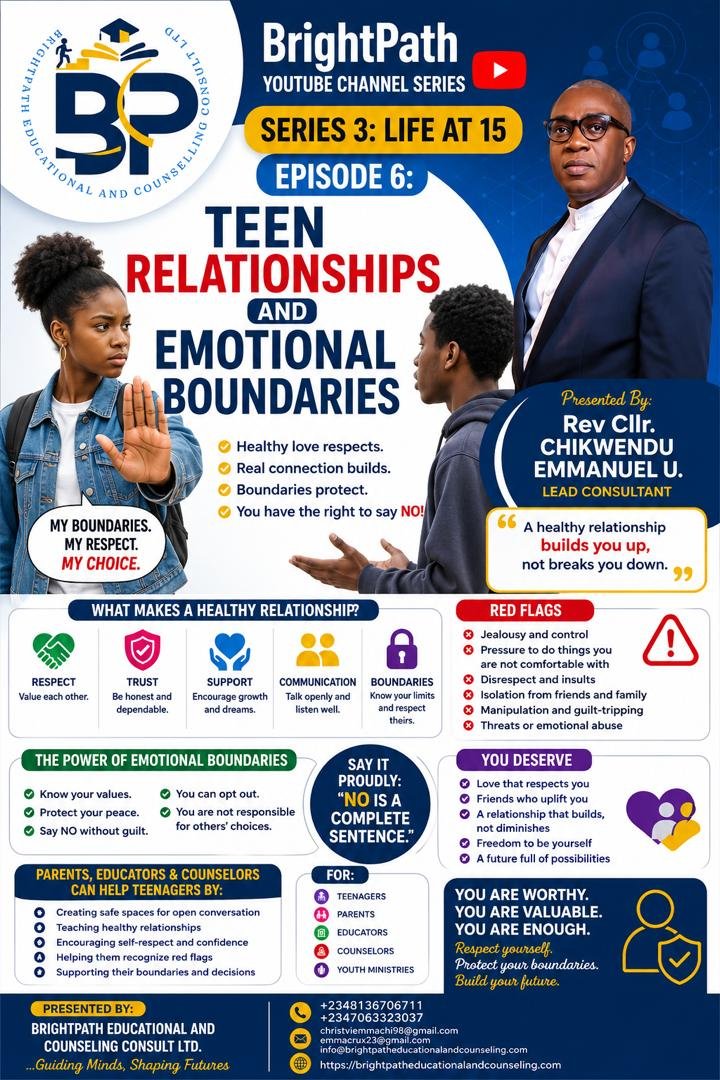
Life At 15, Episode 6: Teen Relationships and Emotional Boundaries

Relationships are an important part of every teenager’s development. During adolescence, young people begin to form deeper friendships, experience attraction, and learn how to relate to others beyond their families.
Healthy relationships can provide encouragement, belonging, emotional support, and personal growth. However, unhealthy relationships can lead to emotional pain, manipulation, low self-esteem, poor decision-making, and lasting psychological consequences.
One of the greatest life skills every teenager must learn is how to build healthy relationships while maintaining healthy emotional boundaries.
This episode teaches teenagers that love should never require them to lose themselves.
Why Relationships Are Necessary
Human beings are naturally created for connection.
Healthy relationships help teenagers:
- Develop social skills.
- Learn trust and empathy.
- Build confidence.
- Receive emotional support.
- Experience acceptance and belonging.
- Learn teamwork and cooperation.
Healthy relationships contribute positively to emotional well-being.
What Is a Healthy Relationship?
A healthy relationship is one where both individuals feel:
- Safe
- Respected
- Appreciated
- Trusted
- Encouraged
- Free to express themselves
Healthy relationships are based on mutual respect rather than control.
Whether it is friendship, dating, or mentorship, the relationship should make both individuals better—not bitter.
Characteristics of Healthy Relationships
Healthy relationships are:
Respectful
Each person’s opinions, feelings, and personal values are respected.
Honest
There is openness, truthfulness, and integrity.
Supportive
Good relationships encourage:
- Education
- Personal growth
- Good character
- Positive dreams
Trustworthy
Trust develops through consistency, honesty, and responsibility.
Peaceful
Healthy relationships do not thrive on fear, manipulation, or constant emotional drama.
When Relationships Become Unhealthy
Warning signs include:
- Constant jealousy
- Emotional manipulation
- Controlling behavior
- Isolation from family and friends
- Threats
- Verbal abuse
- Bullying
- Pressure to compromise personal values
- Excessive monitoring of phones or social media
- Fear of saying “No”
A relationship should never cost you your peace, dignity, or identity.
Relationships Should Build, Not Diminish You
The right relationship should help you become:
- More confident
- More responsible
- More emotionally healthy
- More focused
- More respectful
- More hopeful
If a relationship consistently leaves you feeling:
- Worthless
- Afraid
- Guilty
- Drained
- Controlled
- Ashamed
it deserves serious evaluation.
Healthy love strengthens.
Unhealthy love weakens.
Emotional Boundaries: Protecting Your Well-being
Emotional boundaries are healthy limits that protect your mental, emotional, and personal well-being.
They help teenagers decide:
- What is acceptable
- What is unacceptable
- How they deserve to be treated.
- What values they will not compromise.
Boundaries are not walls that push people away.
They are healthy limits that protect meaningful relationships.
The Ability to Opt Out
One of the greatest signs of emotional maturity is knowing when to leave an unhealthy relationship.
Teenagers should understand:
It is acceptable to leave a relationship that:
- Becomes abusive.
- Is emotionally manipulative.
- Encourages harmful behavior.
- Violates personal values.
- Damages mental health.
Leaving a harmful relationship is an act of courage—not failure.
The Power to Say “No”
Every teenager has the right to say:
- No to unhealthy pressure.
- No to emotional manipulation.
- No to bullying.
- No to unwanted physical affection.
- No to activities that violate their values.
- No to risky behavior.
Saying “No” protects your future.
People who truly respect you will also respect your boundaries.
How Parents Can Help
Parents should:
- Create open conversations about relationships.
- Listen without immediate judgment.
- Teach healthy emotional boundaries.
- Model respectful relationships.
- Encourage confidence and self-worth.
Teenagers who feel emotionally secure at home are better equipped to make healthy relationship choices.
How Teachers, Counselors, and Youth Leaders Can Help
They should:
- Teach relationship education.
- Promote emotional intelligence.
- Help teenagers recognize manipulation.
- Build assertiveness skills.
- Encourage respectful communication.
- Create safe spaces for honest discussions.
The BrightPath BOUNDARY Model
B – Build Relationships Wisely
Choose people who encourage your growth.
O – Own Your Values
Never abandon your principles to gain acceptance.
U – Understand Your Worth
You deserve respect and kindness.
N – Never Ignore Red Flags
Pay attention to unhealthy behaviors early.
D – Decide for Yourself
Do not allow others to control your choices.
A – Accept Only Healthy Love
Love should never involve fear or manipulation.
R – Respect Yourself
Self-respect teaches others how to treat you.
Y – You Can Always Walk Away
No relationship is worth losing your identity.
BrightPath Takeaway
Relationships are a beautiful part of growing up, but they should never require you to sacrifice your values, peace, or identity.
Healthy relationships build confidence, encourage growth, and strengthen character. They create freedom—not fear; trust—not control; encouragement—not manipulation.
Learning to set emotional boundaries and confidently say “No” is not selfish—it is a sign of wisdom, maturity, and self-respect.
Remember:
“The healthiest relationships are those where you can be yourself, protect your values, and still feel respected. If a relationship costs you your peace, it is costing you too much.”