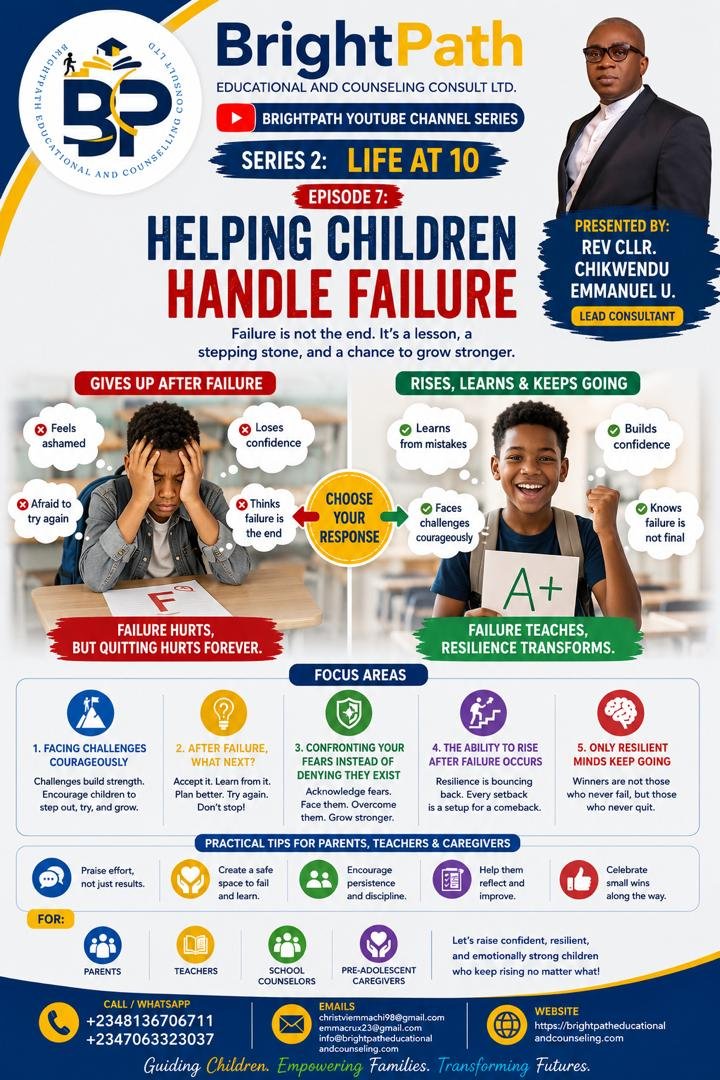
Life At 10, Episode 7: Helping Children Handle Failure

Failure is one of life’s most powerful teachers, yet many children experience it as a personal defeat. At around age 10, children become increasingly aware of success, competition, academic performance, and peer comparisons. When they fail, some become discouraged, fearful, or unwilling to try again.
This episode helps parents, teachers, and counselors teach children that failure is not the end of the journey but an important part of growth, learning, and resilience.
Focus Area 1: Facing Challenges Courageously
Key Question:
Why should children learn to face challenges instead of avoiding them?
Discussion Points:
- Challenges are a normal part of learning and growth.
- Every successful person has faced setbacks.
- Avoiding challenges limits growth and confidence.
- Difficult experiences help children develop problem-solving skills.
- Courage is not the absence of fear but moving forward despite fear.
Practical Lessons:
✔️ Encourage children to attempt difficult tasks.
✔️ Praise effort, not just results.
✔️ Teach that mistakes are opportunities to learn.
✔️ Celebrate persistence and determination.
Core Message:
Growth begins when children learn to face challenges instead of running from them.
Focus Area 2: After Failure, What Next?
Key Question:
What should children do after experiencing failure?
Discussion Points:
- Failure is feedback, not a final verdict.
- Every setback provides valuable lessons.
- Reflection helps children identify what can be improved.
- Success often comes through repeated attempts.
Practical Steps After Failure:
Step 1: Accept the Outcome
- Acknowledge disappointment without shame.
Step 2: Learn the Lesson
- Ask: What can I do differently next time?
Step 3: Make a New Plan
- Set realistic goals for improvement.
Step 4: Try Again
- Persistence builds competence and confidence.
Core Message:
Failure is not falling down; failure is refusing to get back up.
Focus Area 3: Confronting Fears Instead of Denying They Exist
Key Question:
Why is it important for children to face their fears?
Discussion Points:
- Fear of failure can stop children from trying new things.
- Ignoring fear does not make it disappear.
- Acknowledging fear helps children manage it effectively.
- Confidence develops when children overcome fears.
Common Childhood Fears:
- Fear of making mistakes.
- Fear of criticism.
- Fear of rejection.
- Fear of disappointing parents or teachers.
- Fear of public failure.
What Adults Can Do:
✔️ Listen to children’s concerns.
✔️ Normalize fear as part of life.
✔️ Share personal stories of overcoming setbacks.
✔️ Encourage gradual exposure to challenges.
Core Message:
Children become stronger when they learn to face fear rather than hide from it.
Focus Area 4: The Ability to Rise After Failure Occurs
Key Question:
What makes some children recover quickly from failure?
Discussion Points:
- Resilience is the ability to bounce back from setbacks.
- Resilient children view challenges as temporary.
- They focus on solutions rather than problems.
- They believe improvement is possible through effort.
Characteristics of Resilient Children:
✔️ Positive mindset.
✔️ Persistence.
✔️ Emotional control.
✔️ Problem-solving ability.
✔️ Hope for the future.
How Adults Build Resilience:
- Encourage perseverance.
- Teach emotional regulation.
- Focus on strengths.
- Provide support without overprotecting.
Core Message:
The strongest children are not those who never fail, but those who keep rising after failure.
Focus Area 5: Only Resilient Minds Keep Going
Key Question:
Why is resilience more important than perfection?
Discussion Points:
- Life is filled with challenges and unexpected setbacks.
- Perfection is unrealistic.
- Resilience helps children adapt, recover, and grow.
- Success belongs to those who refuse to quit.
Life Lessons Children Need:
✔️ Failure is part of success.
✔️ Every mistake teaches something valuable.
✔️ Persistence often matters more than talent.
✔️ Growth requires effort and patience.
✔️ Strong character is built through overcoming adversity.
Core Message:
Resilient minds see obstacles as stepping stones rather than stopping points.
Practical Takeaways for Parents, Teachers, and Counselors
Teach Children:
- Failure does not define their worth.
- Challenges help them grow stronger.
- Fear can be managed and overcome.
- Learning from mistakes is a sign of maturity.
- Success comes through persistence and resilience.
Avoid:
✘ Shaming children for mistakes.
✘ Comparing them with others.
✘ Focusing only on results.
✘ Creating fear of failure.
Encourage:
✔️ Effort.
✔️ Progress.
✔️ Reflection.
✔️ Problem-solving.
✔️ Determination.
BrightPath Reflection
“Every child will experience failure at some point. The question is not whether failure will happen, but how children will respond when it does. When adults teach children to face challenges, learn from mistakes, confront fears, and rise after setbacks, they equip them with one of life’s greatest strengths—resilience. The future belongs not to those who never fail, but to those who never stop growing.”