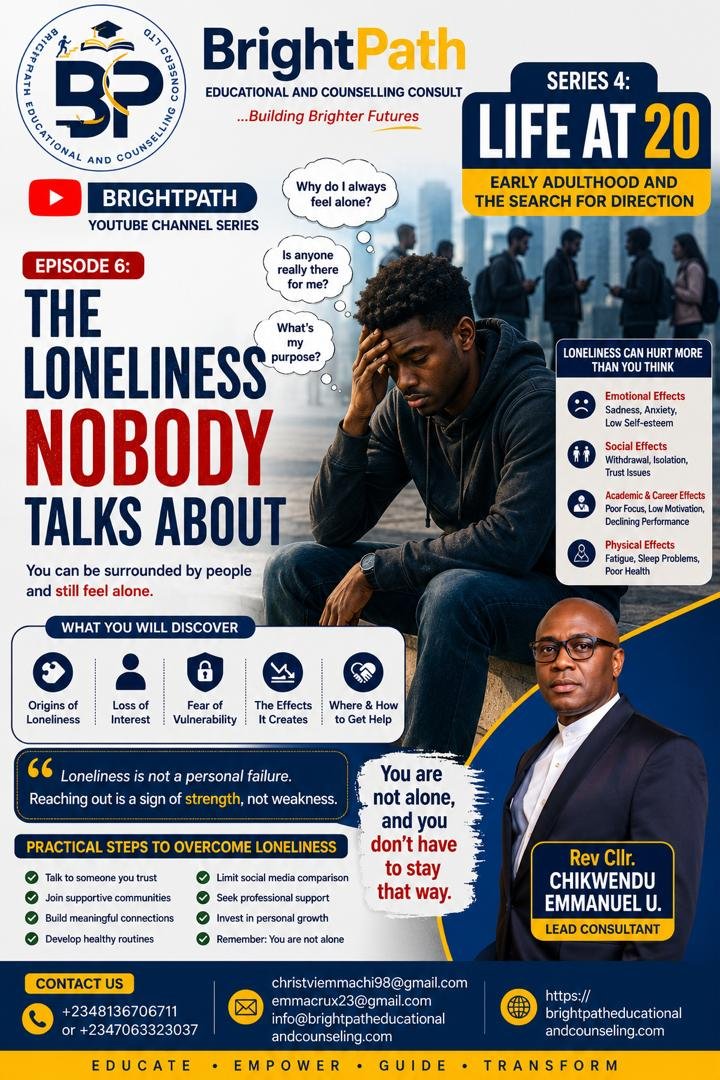
Life At 20, Episode 6: The Loneliness Nobody Talks About

Loneliness is one of the hidden emotional realities of early adulthood.
Many people expect loneliness to disappear after secondary school or university admission, but for many young adults, it becomes even more noticeable during their twenties.
This stage of life brings:
- major life transitions,
- changing friendships,
- career uncertainty,
- relationship challenges,
- relocation,
- increased responsibilities.
As a result, many young adults silently struggle with feelings of isolation.
Question 1
What Is Loneliness?
Loneliness is not simply being alone.
It is the feeling that:
- nobody truly understands you,
- you lack meaningful connection,
- you have no safe place to express yourself,
- you feel emotionally disconnected from others.
A person may be physically alone without feeling lonely.
Likewise, someone can be surrounded by people and still feel deeply isolated.
Question 2
Where Does This Loneliness Come From?
- Life Transitions
Leaving home, changing schools, graduating, relocating, or starting work can disrupt social support systems.
- Career and Academic Pressure
Constant focus on survival and achievement often leaves little room for meaningful relationships.
- Social Media Illusions
Seeing others appear happy and successful can create feelings of exclusion or inadequacy.
⸻
- Broken Relationships
Heartbreak, friendship conflicts, and family misunderstandings can contribute to emotional isolation.
- Identity Confusion
Questions such as:
- Who am I?
- What am I becoming?
- Where do I belong?
can create emotional uncertainty.
- Unrealistic Expectations of Adulthood
Many young adults believe they should already have life figured out, making it difficult to admit struggles.
Question 3
Why Do Many Young Adults Lose Interest in Things They Once Enjoyed?
Persistent loneliness can lead to:
- emotional exhaustion,
- discouragement,
- hopelessness,
- low motivation.
Activities that once brought joy may suddenly feel meaningless.
This may happen because loneliness drains emotional energy and reduces a person’s sense of connection and purpose.
When these feelings become severe or persistent, professional support may be beneficial.
Question 4
Why Is There Fear of Vulnerability?
Many young adults fear opening up because they worry about:
- rejection,
- criticism,
- betrayal,
- being misunderstood,
- appearing weak.
As a result, they often hide their struggles behind:
- smiles,
- achievements,
- humour,
- social media activity.
Yet vulnerability is often the doorway to genuine connection and support.
Question 5
What Are the Effects of Untreated Loneliness?
If left unaddressed, loneliness may contribute to:
Emotional Effects
- sadness,
- anxiety,
- irritability,
- emotional numbness.
Social Effects
- withdrawal from relationships,
- difficulty trusting others,
- communication problems.
Academic and Career Effects
- reduced concentration,
- low motivation,
- declining productivity.
Physical Effects
- sleep difficulties,
- fatigue,
- poor self-care habits.
Question 6
How Can Young Adults Seek Assistance?
Build Genuine Connections
Focus on quality relationships rather than the number of contacts.
Talk to Someone You Trust
This may include:
- friends,
- family members,
- mentors,
- counsellors,
- spiritual leaders.
Join Communities
Participate in:
- student organizations,
- professional associations,
- volunteer activities,
- faith communities,
- skill-development groups.
Develop Healthy Routines
Regular exercise, sleep, balanced nutrition, and purposeful activities support emotional wellbeing.
Reduce Unhealthy Comparison
Limit excessive exposure to unrealistic online lifestyles.
Seek Professional Support
Counsellors and mental health professionals can provide valuable guidance and coping strategies.
Seeking support is a sign of responsibility and self-awareness.
BrightPath Professional Tips
If you feel lonely:
✔️ Remember that loneliness is a human experience, not a personal failure.
✔️ Reach out before isolation becomes overwhelming.
✔️ Build meaningful relationships gradually.
✔️ Practice honest communication.
✔️ Allow trusted people to know what you are experiencing.
✔️ Maintain routines and personal goals.
✔️ Invest in communities that support growth and belonging.
✔️ Seek professional help when needed.
Reflection Questions
Take a moment to ask yourself:
- Do I have people I can speak to honestly?
- Am I avoiding vulnerability because of fear?
- What relationships should I strengthen?
- What activities give me meaning and connection?
- Who can I reach out to this week?
Key Takeaways
- Loneliness is common during early adulthood, even among socially active individuals.
- Major life transitions, social comparisons, and relationship changes often contribute to feelings of isolation.
- Fear of vulnerability can prevent meaningful connection and support.
- Untreated loneliness can affect emotional wellbeing, relationships, academic performance, and career development.
- Genuine relationships, supportive communities, healthy routines, and professional assistance can help reduce loneliness.
Closing
“The loneliness nobody talks about becomes lighter when it is shared. Connection begins with courage—the courage to speak, to reach out, and to allow others to walk alongside you. Your journey was never meant to be travelled alone.”