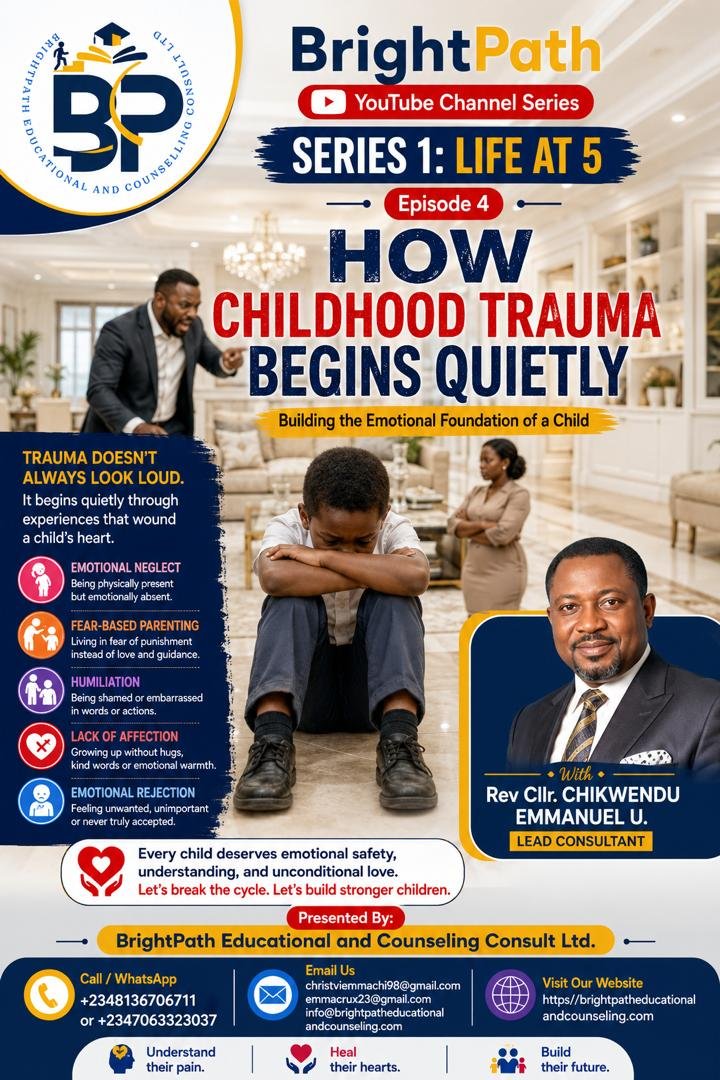
Episode 4: How Childhood Trauma Begins Quietly

Understanding the Hidden Emotional Wounds of Early Childhood
When people hear the word “trauma,” they often think of major accidents, violence, disasters, or other highly disturbing events. While such experiences can certainly cause trauma, many childhood emotional wounds begin much more quietly.
In many homes, schools, and caregiving environments, children experience emotional pain that is often overlooked, misunderstood, or dismissed as normal discipline. Repeated harsh words, constant criticism, emotional neglect, fear-based parenting, humiliation, and lack of affection can leave lasting emotional scars on a child.
At age five, children are developing their sense of identity, emotional security, and understanding of relationships. During this stage, they are highly sensitive to the attitudes, words, and behaviors of the adults around them.
What may seem insignificant to an adult can feel deeply painful to a young child.
Understanding how childhood trauma develops quietly can help parents, teachers, counselors, and caregivers create safer emotional environments where children can grow with confidence and resilience.
What Is Childhood Trauma?
Childhood trauma refers to emotional, psychological, or physical experiences that overwhelm a child’s ability to cope and make the child feel unsafe, rejected, powerless, or unloved.
Trauma is not determined only by the event itself. It is also influenced by how the child experiences and interprets the event.
For example, two children may experience similar situations but respond differently based on their personalities, support systems, and emotional resilience.
When stressful experiences occur repeatedly without adequate emotional support, they can affect the child’s developing brain, emotions, behavior, and relationships.
Trauma can be loud and obvious, but it can also be quiet and hidden.
Many emotional wounds begin through everyday interactions that repeatedly communicate negative messages, such as the following:
- “You are not good enough.”
- “You are a problem.”
- “Your feelings do not matter.”
- “You cannot make mistakes.”
- “You are not loved.”
Over time, these messages can shape a child’s self-image and emotional health.
Harsh Parenting: When Discipline Creates Fear
Discipline is an important part of child development. Children need guidance, boundaries, and correction to learn appropriate behavior.
However, discipline becomes harmful when it is driven by fear, anger, humiliation, or excessive punishment.
Harsh parenting may include:
- Frequent shouting
- Threats and intimidation
- Constant criticism
- Public embarrassment
- Excessive punishment
- Unpredictable reactions
- Fear-based control
Children raised in highly harsh environments often become more focused on avoiding punishment than on learning positive behavior.
At age five, children may not fully understand why adults react harshly. Instead, they often internalize the experience and conclude:
- “I am bad.”
- “I cannot do anything right.”
- “Adults are not safe.”
- “I am not worthy of love.”
Research in child development consistently shows that children learn best through guidance, consistency, and supportive correction rather than fear and intimidation.
Healthy discipline teaches. Harsh discipline often frightens.
Neglect: The Invisible Form of Harm
Neglect is one of the most overlooked forms of childhood trauma.
Unlike physical abuse, neglect often leaves no visible marks. Yet its emotional effects can be profound.
Neglect occurs when a child’s basic emotional, physical, educational, or developmental needs are consistently ignored.
Emotional neglect may include:
- Lack of affection
- Lack of attention
- Ignoring a child’s feelings
- Failure to provide emotional support
- Emotional unavailability of caregivers
A neglected child may receive food, clothing, and shelter but still feel emotionally abandoned.
Children need more than physical care. They need an emotional connection.
When children repeatedly experience emotional neglect, they may begin to believe the following:
- “Nobody cares about me.”
- “My feelings are not important.”
- “I must handle everything alone.”
- “I do not matter.”
These beliefs can affect self-esteem, relationships, and emotional well-being later in life.
Because neglect develops gradually, many adults fail to recognize its impact until significant emotional or behavioral difficulties appear.
Verbal Abuse: Words That Leave Lasting Scars
Words have tremendous power in a child’s life.
Young children often view adults as trusted authorities. Because of this, negative words spoken repeatedly can become deeply embedded in a child’s self-concept.
Verbal abuse may include:
- Insults
- Name-calling
- Humiliation
- Constant criticism
- Mockery
- Belittling comments
- Repeated negative labeling
Statements such as:
- “You are useless.”
- “You never do anything right.”
- “You are a disappointment.”
- “Why can’t you be like other children?”
may seem like expressions of frustration, but they can cause significant emotional harm.
Children often believe what important adults repeatedly tell them.
A child who constantly hears negative messages may begin to see those messages as facts rather than opinions.
Verbal abuse damages:
- Self-esteem
- Confidence
- Emotional security
- Trust
- Motivation
Positive correction helps children improve. Verbal abuse attacks their sense of worth.
The Emotional Consequences of Childhood Trauma
The effects of childhood trauma do not always appear immediately.
Some children become quiet and withdrawn, while others become aggressive, fearful, anxious, or overly dependent on adults.
Common emotional consequences may include:
Low Self-Esteem
Children may develop negative beliefs about themselves and doubt their abilities.
Anxiety and Fear
Children may become excessively worried, fearful of making mistakes, or afraid of disappointing adults.
Difficulty Trusting Others
Children who experience emotional hurt may struggle to trust relationships.
Emotional Withdrawal
Some children learn to hide their emotions because they believe expressing feelings is unsafe.
Behavioral Difficulties
Aggression, defiance, attention-seeking behaviors, or frequent emotional outbursts may sometimes reflect underlying emotional pain.
Academic Challenges
Emotional stress can affect concentration, motivation, memory, and learning.
Without support, these emotional difficulties may continue into adolescence and adulthood.
Recognizing Early Warning Signs
Parents, teachers, and caregivers should pay attention to signs that a child may be struggling emotionally.
Possible warning signs include:
- Sudden changes in behavior
- Excessive fearfulness
- Persistent sadness
- Social withdrawal
- Aggressive behavior
- Frequent emotional outbursts
- Sleep difficulties
- Declining interest in activities
- Difficulty concentrating
These signs do not always indicate trauma, but they may signal that a child needs additional emotional support and understanding.
Creating a Trauma-Informed Environment
Children thrive when they feel emotionally safe, valued, and supported.
Adults can help prevent emotional trauma by
Showing Consistent Love and Affection
Children need regular expressions of care, warmth, and acceptance.
Practicing Positive Discipline
Correct behavior while preserving the child’s dignity and self-worth.
Listening to Children’s Feelings
Allow children to express emotions without fear of ridicule or rejection.
Building Trust
Be predictable, dependable, and emotionally available.
Encouraging Healthy Communication
Create opportunities for children to talk about their thoughts and feelings.
Praising Effort and Progress
Focus on growth and improvement rather than perfection.
Managing Adult Stress Responsibly
Children should not become the targets of adult frustration, anger, or unresolved emotional struggles.
The Role of Counselors, Teachers, and Caregivers
Child development is a shared responsibility.
Teachers, counselors, pediatric caregivers, and other professionals often spend significant time with children and can play an important role in identifying emotional difficulties early.
Supportive adults can:
- Provide emotional encouragement
- Recognize signs of distress
- Promote healthy coping skills
- Foster resilience
- Partner with families to support children’s emotional well-being
Early intervention can reduce the long-term impact of childhood emotional wounds.
Final Reflection
Childhood trauma does not always begin with dramatic events. Sometimes it begins quietly through repeated experiences of harsh parenting, neglect, emotional rejection, or harmful words.
What adults say and do each day matters greatly.
A child’s emotional foundation is built through thousands of daily interactions that communicate love, safety, acceptance, and worth.
When children grow in environments where they feel respected, heard, protected, and valued, they develop the emotional strength needed to face life’s challenges.
Every child deserves more than physical care. Every child deserves emotional safety.
The words we speak, the attention we give, and the relationships we build today can either strengthen or weaken the emotional foundation of tomorrow’s adult.
Let us choose to build emotionally healthy children by creating homes, schools, and communities where children feel genuinely loved, understood, and secure.
About BrightPath Educational and Counselling Consult
BrightPath Educational and Counselling Consult is committed to promoting emotional wellness, child development, educational success, and family support through professional counseling, developmental education, and community awareness programs.
Through the “LIFE AT 5” series, BrightPath continues to equip parents, educators, counselors, and caregivers with practical knowledge that supports the healthy emotional development of children during their most formative years.