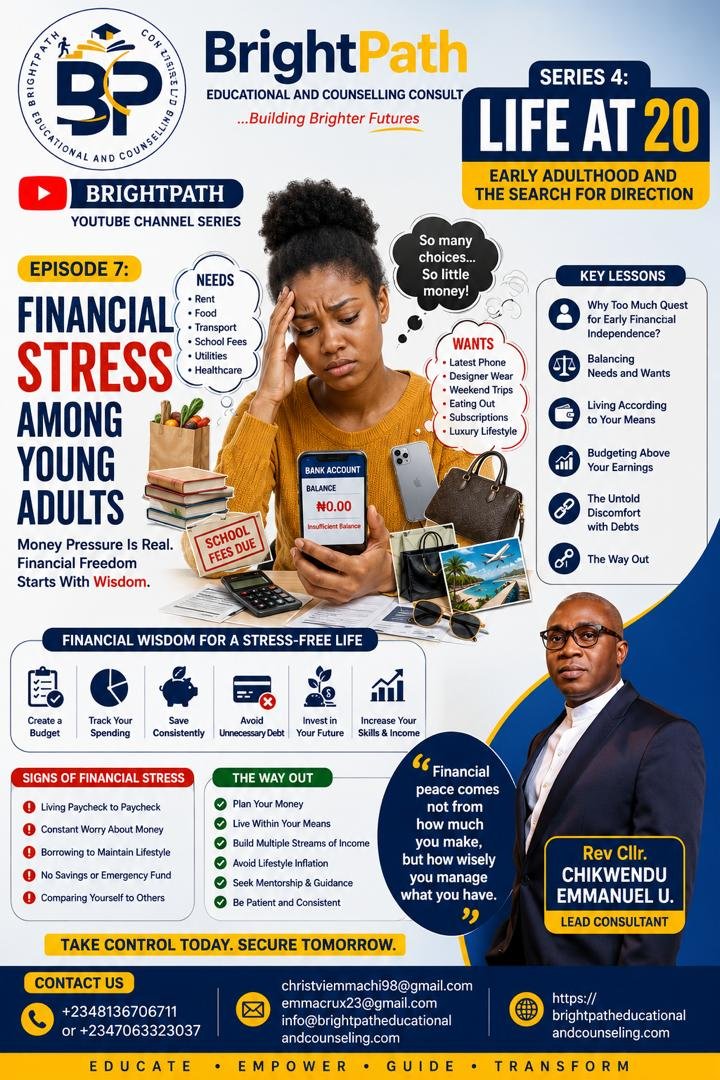
Life At 20, Episode 7: Financial Stress Among Young Adults

Money is one of the biggest concerns during early adulthood.
For many young adults, financial pressure begins almost immediately after graduation or even while still in school.
Questions begin to emerge:
- “When will I become financially independent?”
- “Why are my friends already making money?”
- “Why am I still depending on my parents?”
- “Am I falling behind financially?”
Financial stress often affects emotional wellbeing, relationships, career choices, and self-esteem.
Question 1
Why Is There So Much Pressure for Early Financial Independence?
Several factors contribute to this pressure:
- Social Media Influence
Young adults constantly see images of:
- luxury lifestyles,
- expensive gadgets,
- cars,
- vacations,
- successful businesses.
This creates the impression that everyone else is financially successful.
- Family Expectations
Some families expect young adults to begin contributing financially immediately after graduation.
⸻
- Economic Realities
Rising living costs, unemployment, and economic uncertainty increase financial pressure.
- Personal Expectations
Many young adults create unrealistic financial timelines for themselves.
- Peer Comparison
Watching friends appear financially successful may create unnecessary anxiety.
Question 2
How Do We Balance Needs and Wants?
One of the most important financial skills is distinguishing between needs and wants.
Needs:
These are essentials for survival and functioning.
Examples include:
- food,
- shelter,
- transportation,
- healthcare,
- education.
Wants:
These improve comfort or enjoyment but are not immediately necessary.
Examples include:
- luxury clothing,
- expensive gadgets,
- unnecessary subscriptions,
- status purchases.
Financial wisdom begins when needs receive priority over wants.
⸻
Question 3
Why Is Living According to Your Means Important?
Living according to your means means:
Spending less than or equal to what you earn.
Many financial problems arise when people try to maintain lifestyles they cannot afford.
Signs of financial overextension include:
- borrowing to fund luxury purchases,
- living for appearances,
- constant financial anxiety,
- inability to save.
Sustainable financial growth requires patience and discipline.
Question 4
The Danger of Budgeting Above Your Earnings
Some people build lifestyles based on future income rather than current reality.
This often leads to:
- debt accumulation,
- financial insecurity,
- emotional stress,
- strained relationships.
A healthy budget should include:
- essentials,
- savings,
- investments,
- emergency funds,
- responsible leisure spending.
Question 5
The Untold Discomfort of Debt
Debt is sometimes necessary, especially for education, business growth, or productive investments.
However, unhealthy debt can become emotionally exhausting.
Common effects include:
- anxiety,
- sleep difficulties,
- family conflicts,
- reduced quality of life,
- feelings of shame or hopelessness.
Debt becomes dangerous when borrowed money finances temporary appearances rather than long-term value.
Question 6
What Is the Way Out?
Develop Financial Literacy
Learn:
- budgeting,
- saving,
- investing,
- financial planning.
Start Small
Financial growth rarely happens overnight.
Consistency matters more than size.
Create a Budget
Track:
- income,
- expenses,
- savings,
- financial goals.
Build an Emergency Fund
Unexpected expenses are part of life.
Preparation reduces anxiety.
Avoid Lifestyle Competition
Your financial journey is unique.
Learn Income-Generating Skills
Develop skills that increase employability and entrepreneurship opportunities.
Examples include:
- digital skills,
- communication skills,
- problem-solving skills,
- technical skills.
Seek Mentorship
Financial mentors can help avoid costly mistakes.
BrightPath Professional Tips
If financial stress is affecting you:
✔️ Focus on progress rather than appearances.
✔️ Separate needs from wants.
✔️ Avoid unnecessary debt.
✔️ Learn financial management skills early.
✔️ Build multiple streams of legitimate income where possible.
✔️ Invest in skill development.
✔️ Create realistic financial goals.
✔️ Avoid comparing your finances with social media lifestyles.
✔️ Practice delayed gratification.
✔️ Remember that wealth is built gradually.
Reflection Questions
Ask yourself:
- What financial habits am I building today?
- Am I spending to satisfy needs or impress others?
- Do I have a realistic budget?
- What skills can increase my earning potential?
- What financial lessons do I need to learn this year?
Key Takeaways
- Financial stress is common during early adulthood.
- Pressure for early financial independence often comes from social expectations, social media, family demands, and economic realities.
- Learning to distinguish needs from wants is essential for financial health.
- Living within your means protects your peace of mind and future opportunities.
- Uncontrolled debt can create emotional and financial burdens.
- Financial literacy, budgeting, skill development, and patience are key to long-term stability.
Closing
“Financial success is not about appearing wealthy; it is about building stability, freedom, and opportunities for the future. Wealth built slowly and wisely often lasts longer than wealth pursued through shortcuts. Protect your peace, manage your resources wisely, and allow your financial journey to grow steadily over time.”