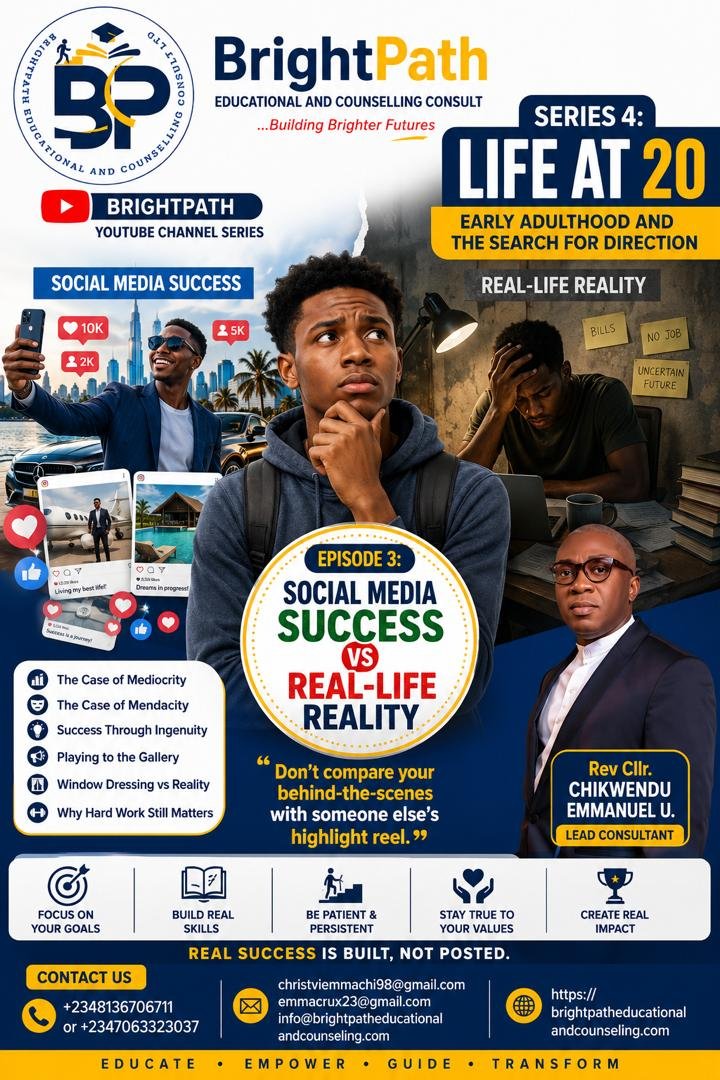
Life At 20, Episode 3: Social Media Success vs. Real-Life Reality

We live in the digital age.
Every day, millions of young people spend hours scrolling through social media platforms where they see:
- Luxury lifestyles
- Expensive cars
- Exotic vacations
- Perfect relationships
- Instant business success
- High-paying jobs
- Glamorous lifestyles
But what many fail to realize is that social media often presents selected moments, not complete lives.
It is a carefully edited highlight reel—not the entire story.
Question 1
What Is Social Media Success?
Social media success is the image people intentionally present to the public.
It may include:
- achievements,
- celebrations,
- awards,
- wealth,
- fashion,
- travels,
- relationships,
- business milestones.
While many of these achievements are genuine, they often represent only the visible side of life.
The invisible side includes:
- disappointments,
- failures,
- financial struggles,
- loneliness,
- anxiety,
- sleepless nights,
- Repeated setbacks.
Question 2
What Is Real-Life Reality?
Real life is different.
Real success usually involves:
- years of preparation,
- continuous learning,
- discipline,
- sacrifices,
- rejection,
- mistakes,
- resilience,
- perseverance.
Behind every meaningful success story are countless unseen hours of hard work.
Question 3
The Case of Mediocrity
Mediocrity means becoming comfortable with average effort while expecting extraordinary results.
Many young people today want:
- quick wealth,
- instant fame,
- immediate recognition,
without developing competence.
Social media can encourage this mindset when people celebrate outcomes without showing the process.
Remember:
Success without competence rarely lasts.
Question 4
The Case of Mendacity (Falsehood)
Mendacity simply means dishonesty or presenting false impressions.
Some individuals:
- rent luxury cars for photos,
- borrow expensive clothing,
- exaggerate achievements,
- buy fake followers,
- create imaginary lifestyles,
- pretend to be successful.
Their goal is not to grow but to impress.
Unfortunately, many young people compare themselves with these carefully manufactured images.
The result is:
- low self-esteem,
- anxiety,
- depression,
- unhealthy competition,
- poor financial decisions.
Question 5
Success Through Ingenuity
Ingenuity means using creativity, intelligence, innovation, and problem-solving to create genuine value.
True success comes from:
- learning valuable skills,
- solving real problems,
- continuous improvement,
- innovation,
- perseverance,
- ethical leadership.
History consistently shows that sustainable success is built through competence, integrity, and service.
Question 6
Playing to the Gallery
“Playing to the gallery” means doing things mainly to gain applause, admiration, or public attention.
Examples include:
- posting only to impress,
- spending beyond one’s means to appear wealthy,
- making decisions based on public opinion rather than personal values,
- chasing likes instead of purpose.
Living for applause often leads to emotional exhaustion because public approval is temporary.
Question 7
Window Dressing Versus Reality
Window dressing refers to making something appear better than it truly is.
Just as a beautifully decorated shop window may hide an empty store, some online profiles hide real struggles.
Reality may include:
- unpaid debts,
- emotional pain,
- academic failure,
- unemployment,
- broken relationships,
- loneliness.
Not everything attractive online reflects the truth.
Question 8
Why Hard Work Still Matters
Technology has changed many things.
But it has not replaced the principles of success.
Hard work remains essential because it develops:
Competence
Knowledge and skills increase through consistent effort.
Character
Challenges build patience, humility, resilience, and discipline.
Confidence
Real confidence comes from mastering skills—not pretending to possess them.
Credibility
People trust individuals who consistently demonstrate competence and integrity.
Long-Term Success
Quick success may disappear quickly.
Success built through hard work is more likely to endure.
BrightPath Professional Tips
If social media is making you feel behind:
✔️ Remember that people post highlights, not their entire journey.
✔️ Reduce unhealthy comparison.
✔️ Focus on building real-life skills.
✔️ Celebrate your own progress.
✔️ Learn from successful people instead of envying them.
✔️ Develop financial discipline.
✔️ Protect your mental health by limiting excessive social media use.
✔️ Invest more time in learning than scrolling.
✔️ Build your reputation on character rather than appearances.
✔️ Let your success speak louder than your publicity.
Reflection Questions
Ask yourself honestly:
- Am I comparing my reality with someone else’s highlight reel?
- Do I seek approval or purpose?
- What skills am I developing today?
- Am I investing more time in appearances than personal growth?
- What kind of legacy do I want to build?
Key Takeaways
- Social media often presents edited highlights rather than complete realities.
- Mediocrity results from expecting extraordinary outcomes without extraordinary effort.
- Mendacity—creating false impressions—may attract attention but undermines trust and long-term fulfilment.
- Ingenuity, creativity, integrity, and hard work produce sustainable success.
- Playing to the gallery and window dressing may earn temporary applause, but genuine achievement is built on competence, character, and perseverance.
- Real success is not measured by likes or followers but by the value you create, the lives you impact, and the person you become.
Closing
“Don’t let social media define your worth or your timeline. Your greatest achievement is not appearing successful—it’s becoming successful through honesty, hard work, continuous learning, and purposeful living. Remember, a meaningful life is built behind the scenes long before it is celebrated in public.”