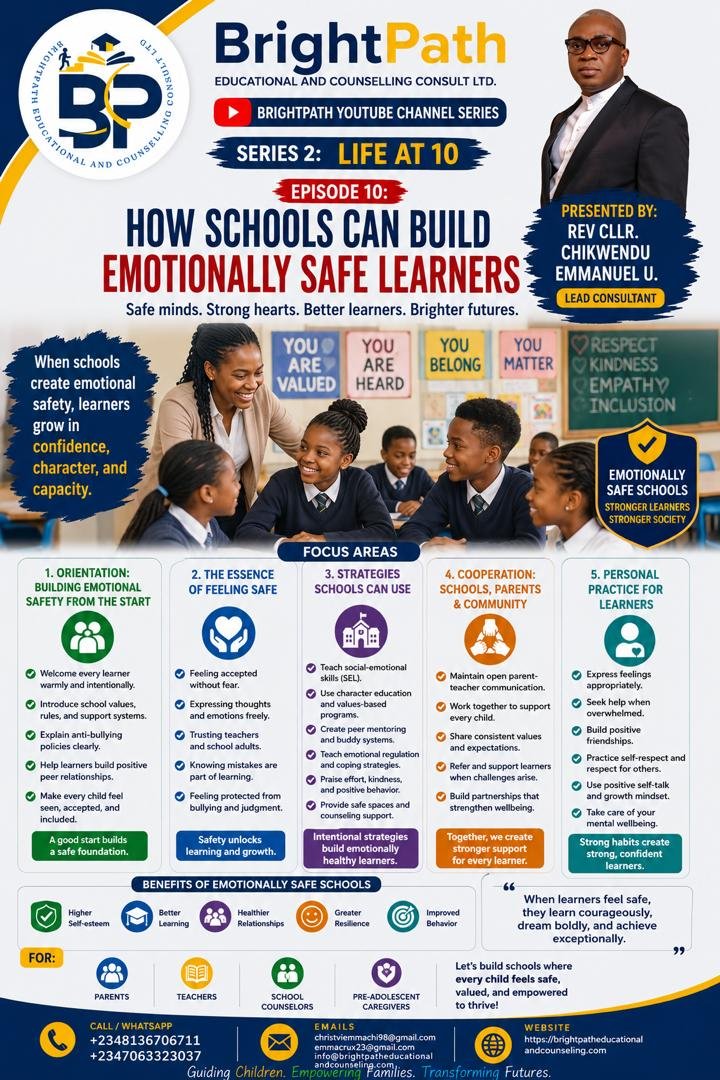
Life At 10, Episode 10: How Schools Can Build Emotionally Safe Learners

Children learn best in environments where they feel safe, respected, valued, and understood. Emotional safety is just as important as physical safety because it affects learning, confidence, behavior, relationships, and overall well-being. When schools intentionally create emotionally supportive environments, students become more engaged, resilient, cooperative, and academically successful.
This episode explores practical ways schools can nurture emotionally safe learners and build a culture where every child can thrive.
Focus Area 1:
Orientation: Building Emotional Safety from the Start
Key Question:
Why should emotional safety begin during school orientation?
Discussion Points:
- First impressions shape children’s perceptions of school.
- New learners need reassurance, acceptance, and belonging.
- Orientation should introduce school values, support systems, and positive expectations.
- Children should know where to seek help when facing challenges.
What Schools Can Do:
✔️ Conduct child-friendly orientation programs.
✔️ Introduce counseling and support services.
✔️ Explain anti-bullying policies.
✔️ Promote inclusion and acceptance.
✔️ Help students build positive peer relationships.
Core Message:
Emotionally safe schools begin by helping every child feel welcomed, valued, and included from day one.
Focus Area 2:
The Essence of Feeling Safe
Key Question:
What does emotional safety mean for a learner?
Discussion Points:
- Feeling accepted without fear of ridicule.
- Being able to express thoughts and emotions respectfully.
- Knowing mistakes are part of learning.
- Trusting teachers and school authorities.
- Feeling protected from bullying, discrimination, and humiliation.
Characteristics of Emotionally Safe Learners:
✔️ Confident participation.
✔️ Willingness to ask questions.
✔️ Healthy peer interactions.
✔️ Better concentration and learning.
✔️ Positive self-esteem.
Core Message:
Children learn more effectively when they feel emotionally secure, respected, and understood.
Focus Area 3:
Strategies Schools Can Infuse into Learners
Key Question:
How can schools intentionally develop emotionally healthy students?
Discussion Points:
- Emotional intelligence should be taught alongside academics.
- Schools should intentionally cultivate empathy, resilience, and self-awareness.
Practical Strategies:
✔️ Social-Emotional Learning (SEL) activities.
✔️ Character education programs.
✔️ Peer mentoring initiatives.
✔️ Emotional regulation and coping skills training.
✔️ Classroom discussions about feelings and relationships.
✔️ Positive behavior reinforcement.
Skills Learners Should Develop:
- Self-awareness.
- Self-control.
- Empathy.
- Conflict resolution.
- Responsible decision-making.
Core Message:
Emotionally healthy learners are intentionally developed through consistent teaching and practice.
Focus Area 4:
Cooperation Between School, Home, and Community
Key Question:
Why is collaboration important in emotional development?
Discussion Points:
- Children thrive when parents and schools work together.
- Consistent messages create stability and trust.
- Community support strengthens positive development.
Key Areas of Cooperation:
✔️ Parent-teacher communication.
✔️ Counseling referrals when necessary.
✔️ Parenting education programs.
✔️ Joint efforts in addressing behavioral concerns.
✔️ Community-based support systems.
Benefits:
- Improved student well-being.
- Better academic outcomes.
- Reduced behavioral problems.
- Stronger social relationships.
Core Message:
Emotional safety grows stronger when schools, families, and communities work as partners.
Focus Area 5:
Personal Practices for Emotional Safety
Key Question:
What personal habits can learners develop to maintain emotional well-being?
Discussion Points:
- Emotional safety also requires personal responsibility.
- Children should learn healthy ways to manage emotions and relationships.
Healthy Personal Practices:
✔️ Express feelings appropriately.
✔️ Seek help when overwhelmed.
✔️ Build positive friendships.
✔️ Practice self-respect and respect for others.
✔️ Learn stress-management techniques.
✔️ Develop a growth mindset.
✔️ Engage in positive self-talk.
Daily Affirmations for Learners:
- “I am valuable.”
- “I can learn from my mistakes.”
- “I can ask for help when needed.”
- “I deserve respect and will respect others.”
Core Message:
Emotionally safe learners develop habits that support confidence, resilience, and healthy relationships.
Practical Takeaways for Teachers, Parents, and Counselors
Remember:
✔️ Emotional safety promotes academic success.
✔️ Every child deserves to feel heard and valued.
✔️ Positive relationships strengthen learning.
✔️ Emotional intelligence can be taught.
✔️ Collaboration is essential for healthy development.
✔️ Safe learners become confident learners.
BrightPath Reflection
“A child’s ability to learn is deeply connected to their emotional well-being. When schools become places of trust, acceptance, encouragement, and support, learners gain the confidence to participate, explore, make mistakes, and grow. Emotional safety is not an extra feature of education—it is the foundation upon which meaningful learning is built. Every emotionally safe learner becomes a stronger, healthier, and more successful individual.”