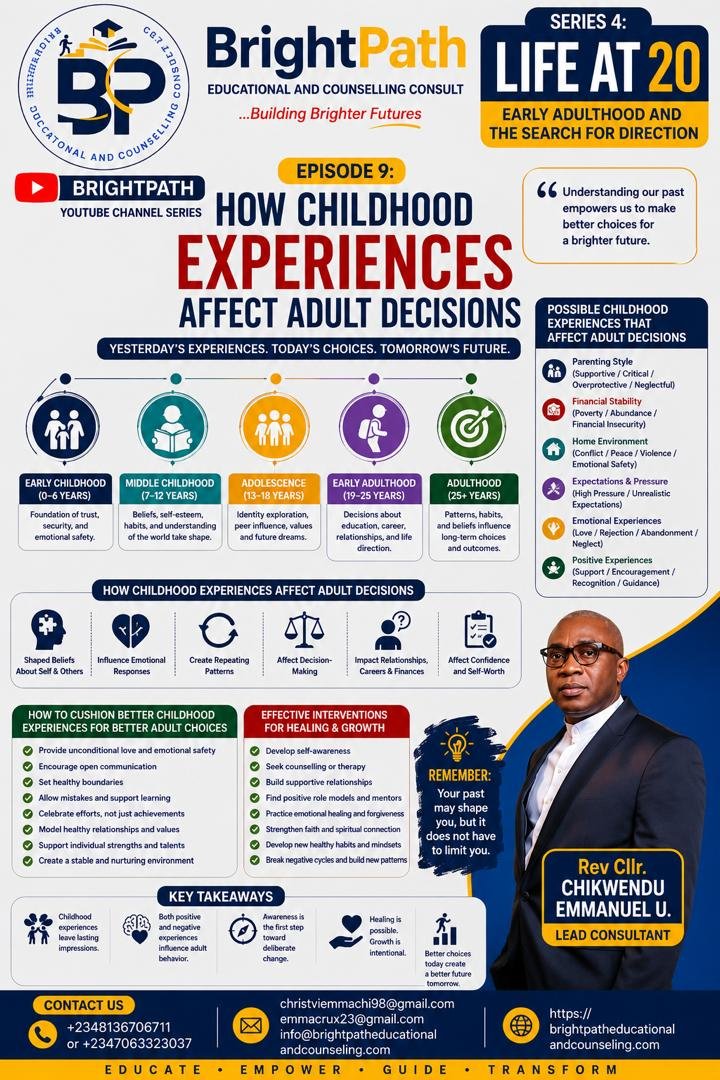
Life At 20, Episode 9: How Childhood Experiences Affect Adult Decisions

Many people assume adulthood begins with a clean slate.
In reality, adulthood often carries:
- childhood lessons,
- childhood fears,
- childhood beliefs,
- childhood wounds,
- childhood strengths.
Our early experiences influence how we:
- trust others,
- handle money,
- choose careers,
- manage relationships,
- respond to stress,
- view ourselves and the world.
Understanding these connections is one of the first steps toward emotional maturity and self-awareness.
Question 1
What Childhood Experiences Can Affect Adult Decisions?
- Parenting Style
Children raised with:
- warmth and support often develop confidence,
- excessive criticism may develop fear of failure,
- overprotection may reduce independence,
- neglect may create insecurity and trust difficulties.
- Childhood Poverty or Financial Instability
This may influence:
- spending habits,
- fear of financial risks,
- excessive saving,
- financial anxiety,
- obsession with financial security.
- Exposure to Conflict and Violence
Children who frequently witness:
- domestic conflict,
- aggression,
- instability,
may later struggle with:
- trust,
- emotional regulation,
- healthy communication.
- Excessive Pressure for Achievement
Children constantly pressured to perform may become adults who:
- tie self-worth to achievement,
- fear mistakes,
- struggle with perfectionism,
- experience burnout.
- Childhood Neglect or Emotional Rejection
Possible adult consequences include:
- fear of abandonment,
- people-pleasing behaviour,
- difficulty expressing needs,
- unhealthy attachment patterns.
- Positive Childhood Experiences
Supportive environments can foster:
- confidence,
- resilience,
- empathy,
- leadership,
- healthy relationships.
Not all childhood influences are negative.
Question 2
How Do Childhood Experiences Affect Adult Decisions?
Childhood experiences influence through:
Belief Systems
Examples include:
- “I am not good enough.”
- “I must never fail.”
- “People cannot be trusted.”
- “I must always please others.”
These beliefs often operate unconsciously.
Emotional Conditioning
Past experiences shape how adults react to:
- criticism,
- rejection,
- disappointment,
- conflict.
Behavioural Patterns
People often repeat familiar relationship patterns learned during childhood.
Attachment Styles
Early caregiver relationships influence:
- intimacy,
- trust,
- communication,
- emotional dependence.
Question 3
What Adult Decisions Are Commonly Influenced?
Career Decisions
Examples:
- choosing careers for approval rather than passion,
- fear of taking opportunities,
- avoiding leadership roles.
Relationship Choices
Examples:
- fear of commitment,
- remaining in unhealthy relationships,
- fear of vulnerability.
Financial Decisions
Examples:
- compulsive spending,
- excessive saving,
- fear of investments.
Parenting Approaches
Many adults either repeat or intentionally reject the parenting styles they experienced.
Question 4
How Can We Create Better Childhood Experiences for Future Adults?
Provide Emotional Safety
Children need:
- acceptance,
- listening ears,
- encouragement,
- healthy boundaries.
Allow Children to Make Mistakes
Mistakes are opportunities for learning and growth.
Encourage Healthy Communication
Children should feel safe expressing emotions and asking questions.
Promote Secure Attachments
Consistent love and support build emotional security.
Model Healthy Relationships
Children learn more from observation than instruction.
Support Individual Talents
Avoid forcing children into identities that do not fit their strengths and interests.
Question 5
What Interventions Help Adults Heal From Childhood Experiences?
Self-Awareness
Healing begins with understanding patterns.
Ask:
- Why do I react this way?
- Where did this belief come from?
Counselling and Therapy
Professional support helps individuals:
- process experiences,
- challenge unhealthy beliefs,
- develop healthier coping strategies.
Mentorship
Healthy role models can provide corrective experiences and guidance.
Building Supportive Relationships
Positive relationships help reshape expectations and emotional responses.
Developing Emotional Intelligence
Learning emotional awareness improves decision-making and resilience.
Spiritual Growth and Faith
Faith communities and spiritual practices can provide meaning, hope, and healing.
BrightPath Professional Tips
✔️ Your childhood influences you but does not define your destiny.
✔️ Awareness creates opportunities for change.
✔️ Healthy relationships can help repair unhealthy patterns.
✔️ Seek help when childhood experiences continue to affect your wellbeing.
✔️ Parents and caregivers are shaping future adults every day.
✔️ Healing is a process, not an event.
✔️ It is possible to break unhealthy generational cycles.
Reflection Questions
Ask yourself:
- What childhood experiences shaped my beliefs about myself?
- How do my childhood experiences affect my relationships?
- Are there patterns I need to change?
- What strengths did my childhood give me?
- What kind of experiences do I want future children to remember?
Key Takeaways
- Childhood experiences significantly influence adult choices and behaviour.
- Both positive and negative experiences leave lasting impressions.
- Parenting styles, emotional environments, financial experiences, and early relationships shape adult decision-making.
- Self-awareness, mentorship, counselling, and emotional growth can help individuals overcome unhealthy patterns.
- Childhood may shape the starting point of life, but adulthood provides opportunities for growth and transformation.
Closing
“Your childhood may explain many parts of your story, but it does not have to determine your ending. Awareness creates freedom, healing creates growth, and intentional decisions create a better future. By understanding where we come from, we become better equipped to choose where we are going.”