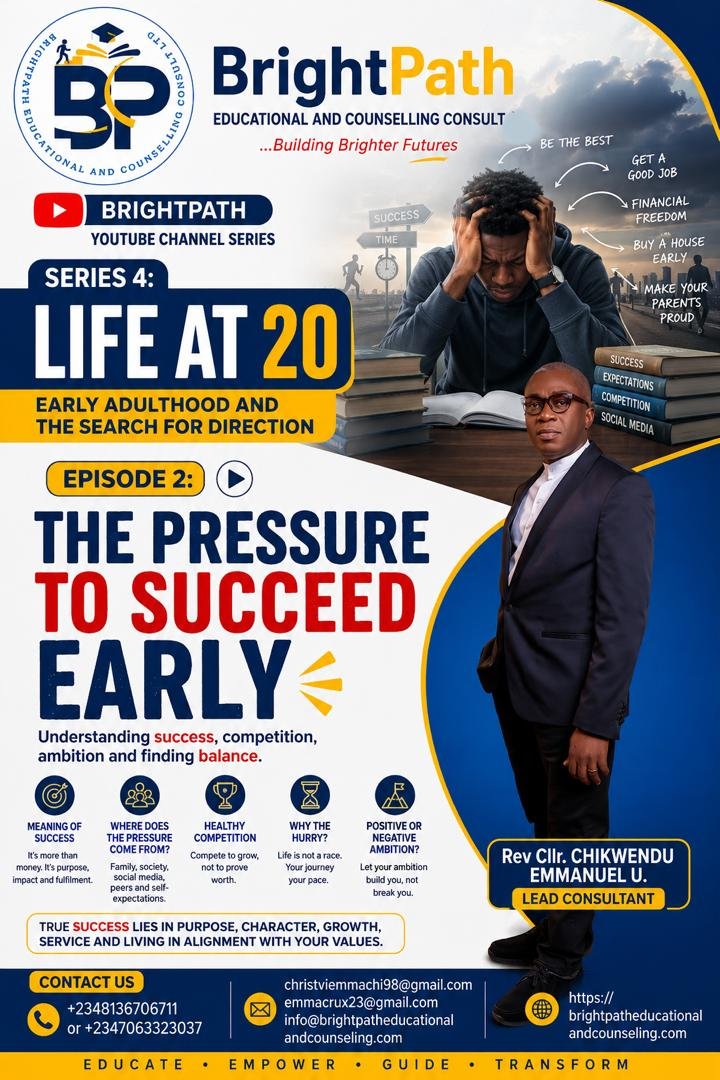
Life At 20, Episode 2: The Pressure to Succeed Early

Today’s society celebrates early success.
Every day, social media presents stories of young millionaires, top graduates, entrepreneurs, influencers, athletes, and innovators who seem to have achieved extraordinary success at a young age.
While these stories can inspire us, they can also create unhealthy pressure.
Many young adults begin to believe that life is a race and that anyone who reaches success first is automatically the winner.
But is that really true?
Question 1
What Is Success?
Success means different things to different people.
For some people, success is:
- Financial independence.
- Academic excellence.
- Career advancement.
- Building a happy family.
- Good health.
- Making a positive impact.
- Living according to one’s values and purpose.
True success is not merely about what you have; it is about who you become and the positive difference you make.
At BrightPath, we define success as:
“Living a purposeful life, continuously growing, achieving meaningful goals, and contributing positively to society while maintaining personal well-being and integrity.”
Question 2
Where Does the Pressure to Succeed Early Come From?
Several factors contribute to this pressure.
- Social Media
Young people constantly see:
- Luxury lifestyles.
- Expensive cars.
- Promotions.
- International travel.
- Business achievements.
Rarely do they see the years of struggle, failure, sacrifice, or setbacks behind these accomplishments.
Comparison creates unrealistic expectations.
- Family Expectations
Some parents expect their children to:
- graduate early,
- secure prestigious jobs,
- support the family financially,
- marry at a certain age.
These expectations can become overwhelming.
- Peer Competition
Friends often compare the following:
- salaries,
- career positions,
- academic achievements,
- businesses,
- relationships.
This comparison can create unnecessary anxiety.
- Cultural Expectations
Many societies define adulthood by visible achievements such as wealth, marriage, home ownership, or social status.
- Personal Expectations
Sometimes the greatest pressure comes from ourselves.
We set unrealistic deadlines and feel disappointed when life unfolds differently.
Question 3
What Areas of Life Require Healthy Competition?
Competition itself is not bad.
Healthy competition motivates growth.
Examples include:
Academics
Competing to improve knowledge and skills.
Sports
Competition builds discipline, teamwork, resilience, and excellence.
Career Development
Learning new skills and improving professional competence.
Entrepreneurship
Creating better products and services that benefit society.
Personal Growth
The most important competition is with your former self.
Ask yourself:
“Am I becoming better than I was yesterday?”
That is the healthiest competition.
Areas Where Competition Can Be Harmful
Avoid competing over:
- material possessions,
- social media popularity,
- physical appearance,
- relationships,
- other people’s life timelines.
These comparisons often lead to stress, envy, and dissatisfaction.
Question 4
Why the Hurry?
Many young adults rush because they believe:
- success has an expiration date,
- everyone else is ahead,
- opportunities will disappear,
- they are running out of time.
However, life is not a sprint.
Different people bloom at different seasons.
Many respected leaders, entrepreneurs, scholars, and innovators achieved their greatest successes later in life after years of preparation and perseverance.
Growth takes time.
Question 5
Can Ambition Be Positive or Negative?
Yes.
Positive Ambition
Healthy ambition inspires people to:
- learn continuously,
- work diligently,
- set meaningful goals,
- serve others,
- persevere through challenges.
Positive ambition is guided by purpose and values.
Negative Ambition
Unhealthy ambition seeks success at any cost.
It may involve:
- dishonesty,
- unhealthy competition,
- burnout,
- neglecting family or health,
- comparing oneself constantly with others.
Negative ambition often brings temporary achievement but long-term dissatisfaction.
Question 6
Where Does True Success Lie?
True success is found in:
Purpose
Knowing why you do what you do.
Character
Integrity matters more than popularity.
Growth
Success is becoming a better version of yourself.
Service
Using your gifts to improve the lives of others.
Balance
Protecting your mental health, relationships, faith, and physical well-being while pursuing your goals.
Fulfilment
A successful person is one who experiences inner peace because their life aligns with their values and purpose.
BrightPath Professional Tips
If you feel pressured to succeed:
✔️ Define success for yourself—not by society’s standards.
✔️ Avoid unhealthy comparisons.
✔️ Celebrate small achievements.
✔️ Focus on developing valuable skills.
✔️ Learn from failures instead of fearing them.
✔️ Build meaningful relationships.
✔️ Seek guidance from mentors and counsellors.
✔️ Prioritize your mental and emotional health.
✔️ Be patient with your journey.
✔️ Remember: lasting success is built step by step, not overnight.
Reflection Questions
Take a moment to ask yourself:
- What does success truly mean to me?
- Am I pursuing my own dreams or someone else’s expectations?
- What skills do I need to develop to reach my goals?
- Am I competing with others or improving myself?
- What kind of legacy do I want to leave?
Write your answers in a journal and revisit them as you grow.
Key Takeaways
- Success is personal and should be defined by purpose, values, and contribution—not by comparison.
- Pressure to succeed early often comes from social media, family expectations, peers, culture, and self-imposed deadlines.
- Healthy competition encourages learning and growth, while unhealthy comparison breeds anxiety.
- Ambition is positive when guided by integrity, purpose, and balance, but harmful when driven by fear or the desire to outshine others.
- True success lies in becoming a person of character, serving others, maintaining well-being, and making steady progress over time.
Closing
“Your life is not measured by how quickly you arrive but by the purpose with which you travel. Don’t allow society’s timelines to steal your peace or your confidence. Build your future one meaningful step at a time. Success is not simply arriving early—it is arriving prepared, fulfilled, and true to who you are.”