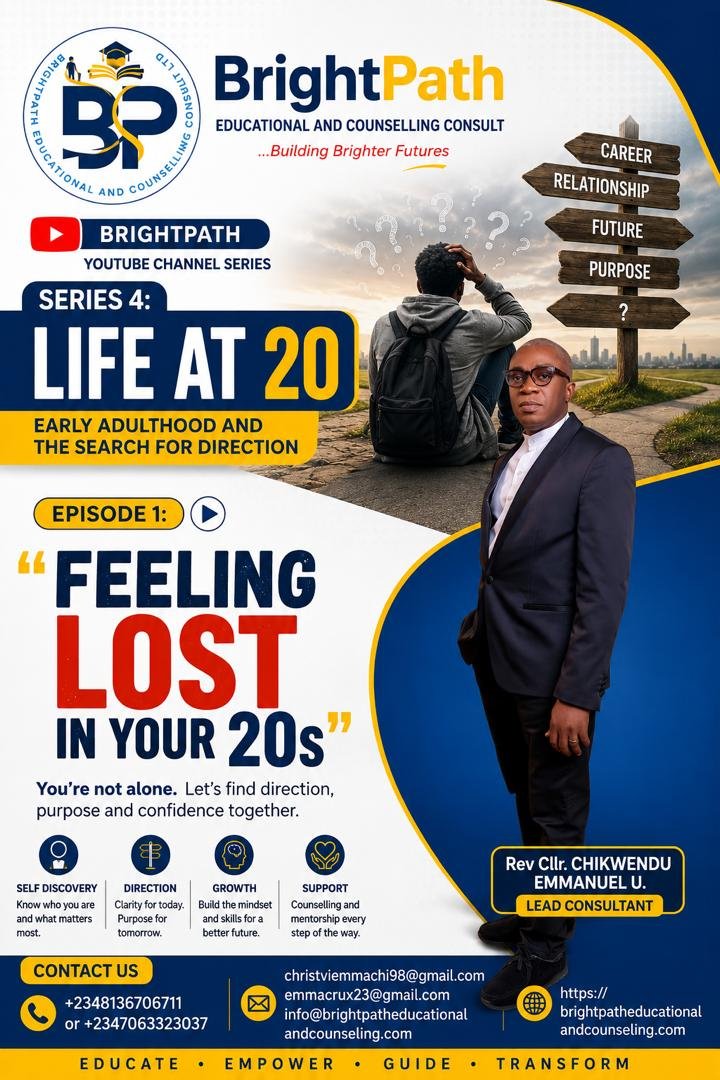
Life At 20, Episode 1: Feeling Lost in Your 20s

Your twenties are often described as the most exciting years of life.
Yet research and lived experience show they can also be among the most confusing.
Many young adults feel pressured to succeed quickly, choose the right career, build relationships, become financially independent, and discover their purpose—all at once.
Feeling lost at this stage is far more common than many people realize.
Question 1
“When you think you have grown, what does growth really mean?”
Many people assume that turning 20 automatically means becoming an adult.
But age does not guarantee maturity.
Growing older is automatic.
Growing wiser is intentional.
There are different dimensions of growth:
- Physical growth
- Emotional growth
- Mental growth
- Social growth
- Career growth
- Spiritual growth
- Financial growth
A person may be physically 20 years old but emotionally respond like a teenager.
Real adulthood involves growth across all these areas.
Question 2
Is Growth Different from Maturity?
Absolutely.
Growth
Growth simply means development over time.
It often happens naturally.
Examples include:
- getting older
- finishing school
- becoming stronger physically
Maturity
Maturity refers to how wisely you think, make decisions, regulate emotions, and take responsibility.
A mature young adult:
- accepts responsibility
- learns from mistakes
- delays gratification
- controls emotions
- thinks before acting
- respects others
- plans for the future
You can grow without becoming mature.
But genuine maturity always involves meaningful growth.
Question 3
Why Do Many People Feel Lost in Their Twenties?
There are many reasons.
- Identity Questions
Young adults begin asking:
- Who am I?
- What am I good at?
- What career fits me?
- What kind of life do I want?
These questions can feel overwhelming.
- Too Many Choices
Unlike childhood, adulthood offers almost unlimited options.
Should you:
- work?
- study further?
- relocate?
- marry?
- start a business?
Too many options sometimes create confusion rather than freedom.
- Comparing Yourself to Others
Social media constantly shows:
- promotions
- weddings
- vacations
- expensive lifestyles
- business success
What it rarely shows are failures, doubts, setbacks, or struggles.
Comparison creates unnecessary pressure.
- Fear of Failure
Many young adults believe:
“If I make one wrong decision, my life is over.”
That simply isn’t true.
Life allows room for learning, correction, and growth.
- Pressure from Family and Society
Questions like:
- “When will you graduate?”
- “When will you get a job?”
- “When will you marry?”
can create anxiety and make young adults feel inadequate.
Question 4
Is It Too Late If I Haven’t Achieved My Goals by 20?
No.
One of the biggest myths is that success has a fixed deadline.
Life is not a race.
People develop at different speeds.
Some discover their purpose at 18.
Others at 25.
Some at 40.
Some after retirement.
Your journey is unique.
What matters most is steady progress, not speed.
Question 5
Why Are Many People So Anxious at 20?
Several developmental factors contribute.
Uncertainty
Everything seems uncertain:
- career
- finances
- relationships
- future
Financial Pressure
Many are expected to become financially independent while still figuring life out.
Fear of Making Wrong Decisions
Choosing:
- a degree
- a career
- a partner
can feel overwhelming.
Brain Development
An important scientific fact:
The human brain, especially the prefrontal cortex responsible for planning, judgment, emotional regulation, and decision-making, continues developing into the mid-to-late twenties.
This means it is normal to still be learning, experimenting, and refining your judgment during this period.
Social Expectations
Society often tells young adults they should already have everything figured out.
This expectation is unrealistic.
Question 6
What Makes Your Twenties Unique?
Your twenties are a season of transition.
Some unique characteristics include:
Identity Formation
You begin defining who you truly are—not just who others expect you to be.
Independence
You start making decisions without parents deciding everything.
Exploration
You experiment with:
- careers
- relationships
- beliefs
- lifestyles
- interests
Building Habits
The routines developed now often influence the next several decades of life.
Emotional Growth
You learn:
- resilience
- patience
- self-control
- emotional intelligence
Career Development
This is usually when foundational work experience is gained.
⸻
Purpose Discovery
Many people begin discovering their gifts, passions, and life’s direction during this period.
BrightPath Professional Tips
If you feel lost:
✔️ You are not alone.
✔️ Feeling confused does not mean you are failing.
✔️ Avoid comparing your timeline with someone else’s.
✔️ Keep learning new skills.
✔️ Build healthy friendships.
✔️ Seek mentors.
✔️ Take care of your mental health.
✔️ Focus on progress rather than perfection.
✔️ Pray, reflect, and remain open to growth if faith is important to you.
✔️ Remember that direction is often discovered through consistent action, not by waiting for complete certainty.
Reflection Questions
Ask yourself:
- Who am I becoming?
- What values guide my decisions?
- What strengths do I already possess?
- What skills should I develop this year?
- What kind of life do I want to build over the next five years?
Write your answers in a journal and revisit them regularly.
Key Takeaways
- Growing older is automatic; maturity is intentional.
- Feeling lost in your twenties is common and often part of healthy development.
- Comparison can increase anxiety and distort your perspective.
- Success does not have a universal timeline.
- Your twenties are a period of exploration, learning, identity formation, and purpose discovery.
- Consistent growth is more valuable than rushing to meet others’ expectations.
Closing
“Your twenties are not about having all the answers—they’re about asking the right questions, learning from your experiences, and growing into the person you are becoming. Give yourself permission to learn, adapt, and keep moving forward. Every step you take with intention brings you closer to a meaningful future.”