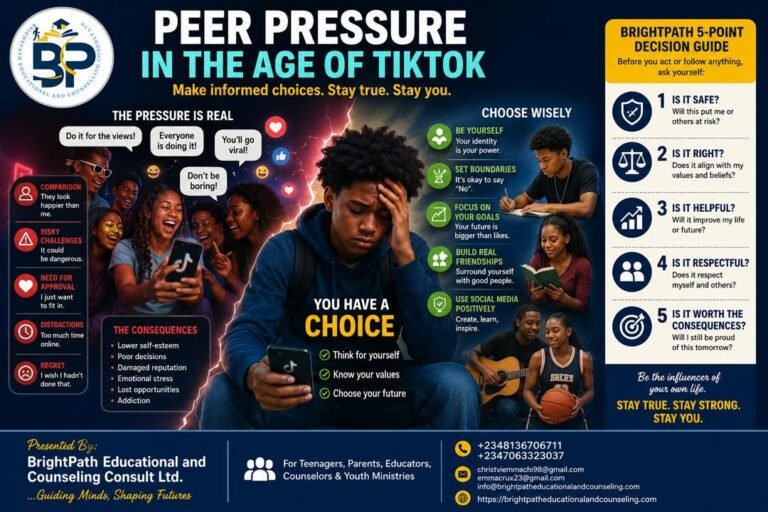
Life At 15, Episode 2: Peer Pressure in The Age of TikTok

Today’s teenagers are growing up in a digital world where social media platforms such as TikTok, Instagram, Snapchat, Facebook, and YouTube significantly influence how they think, behave, communicate, and make decisions.
Unlike previous generations, today’s teenagers are exposed to thousands of opinions, trends, challenges, lifestyles, and role models every day. While technology offers opportunities for learning, creativity, and connection, it also creates new forms of peer pressure that can shape choices positively or negatively.
The question is no longer whether teenagers face peer pressure, but how they can navigate it wisely.
What Is Peer Pressure?
Peer pressure is the influence that friends, classmates, social groups, or online communities have on an individual’s thoughts, attitudes, values, and behaviors.
It occurs when a teenager feels encouraged, persuaded, or pressured to think, dress, act, or behave in a certain way to gain acceptance or avoid rejection.
Today, peer pressure extends beyond physical friends and now includes:
- Social media influencers
- Online communities
- TikTok creators
- Viral trends
- Celebrity lifestyles
- Digital challenges
The Pros of Peer Influence
Not all peer influence is harmful. Positive peer influence can help teenagers grow and develop healthy habits.
- Academic Motivation
Friends can encourage one another to:
- Study harder
- Complete assignments
- Prepare for examinations
- Pursue educational goals
- Skill Development
Peers may inspire teenagers to learn:
- Music
- Sports
- Public speaking
- Leadership
- Entrepreneurship
- Digital skills
- Emotional Support
Positive friendships provide:
- Encouragement
- Belonging
- Acceptance
- Confidence
- Healthy Lifestyle Choices
Good friends often motivate one another to:
- Avoid harmful substances
- Participate in sports
- Engage in productive activities
- Develop positive character
The Cons of Peer Pressure in the TikTok Age
Digital peer pressure can be more powerful because it operates 24 hours a day.
- Comparison Culture
Teenagers may compare themselves with others regarding:
- Appearance
- Wealth
- Relationships
- Academic achievement
- Social popularity
This can lead to:
- Low self-esteem
- Anxiety
- Dissatisfaction
- Risky Challenges
Some online trends encourage:
- Dangerous stunts
- Reckless behavior
- Attention-seeking activities
Many teenagers participate to gain views, likes, or acceptance.
- Identity Confusion
Constant exposure to different lifestyles can create confusion about:
- Personal values
- Beliefs
- Goals
- Self-worth
- Addiction to Validation
Some teenagers become dependent on:
- Likes
- Shares
- Followers
- Online approval
This may negatively affect emotional well-being.
- Fear of Missing Out (FOMO)
Many young people fear being left out of:
- Social events
- Trends
- Friend groups
- Online conversations
This often results in unnecessary pressure and stress.
Why Personal Interest Matters
One of the strongest protections against negative peer pressure is having a clear sense of personal identity.
Teenagers who understand:
- Who they are
- What they value
- What they believe
- Where they are going
are less likely to be controlled by trends.
Encourage Teenagers To Discover:
- Their strengths
- Talents
- Passions
- Career interests
- Personal goals
Purpose provides direction.
When a teenager knows where they are going, they become less distracted by where everyone else is going.
How Can Teenagers Be Assisted?
- Build Self-Confidence
Confident teenagers are more likely to make independent decisions.
Parents and educators should:
- Recognize strengths
- Encourage achievements
- Provide positive feedback
- Teach Critical Thinking
Teenagers should learn to ask:
- Is this safe?
- Is this beneficial?
- Does this align with my values?
- What are the consequences?
- Strengthen Communication
Create safe spaces where teenagers can discuss:
- Online experiences
- Social pressures
- Emotional struggles
- Difficult choices
- Promote Healthy Mentorship
Trusted adults can help teenagers:
- Evaluate decisions
- Clarify goals
- Build resilience
- Encourage Digital Literacy
Teach young people how to:
- Verify information
- Identify manipulation
- Understand algorithms
- Manage screen time responsibly
A Yardstick for Determining Proper Choices
Before following any trend, challenge, or social influence, teenagers should ask themselves the following five questions:
The BrightPath 5-Point Decision Test
- Is It Safe?
Will this activity put me or others at risk?
- Is It Right?
Does it align with my values, family principles, and moral standards?
- Is It Helpful?
Will it improve my life, skills, or future?
- Is It Respectful?
Does it respect myself and others?
- Is It Worth the Consequences?
If everyone knew I did this, would I still be proud of the decision?
If the answer to any of these questions is “No,” it is wise to reconsider.
What Parents, Teachers, and Counselors Should Remember
Teenagers today do not merely need control; they need guidance.
They need adults who:
- Listen without judgment
- Understand digital realities
- Provide emotional support
- Teach decision-making skills
- Encourage healthy independence
The goal is not to isolate teenagers from the world but to equip them to engage with it wisely.
BrightPath Takeaway
Peer pressure has always existed, but social media has amplified its reach and influence. In the age of TikTok, teenagers are constantly exposed to competing voices trying to shape their identity, choices, and values.
The solution is not fear of technology but the development of a strong identity, critical thinking, emotional intelligence, and supportive relationships.
Remember:
“A teenager who knows who they are will not easily become who others want them to be.”