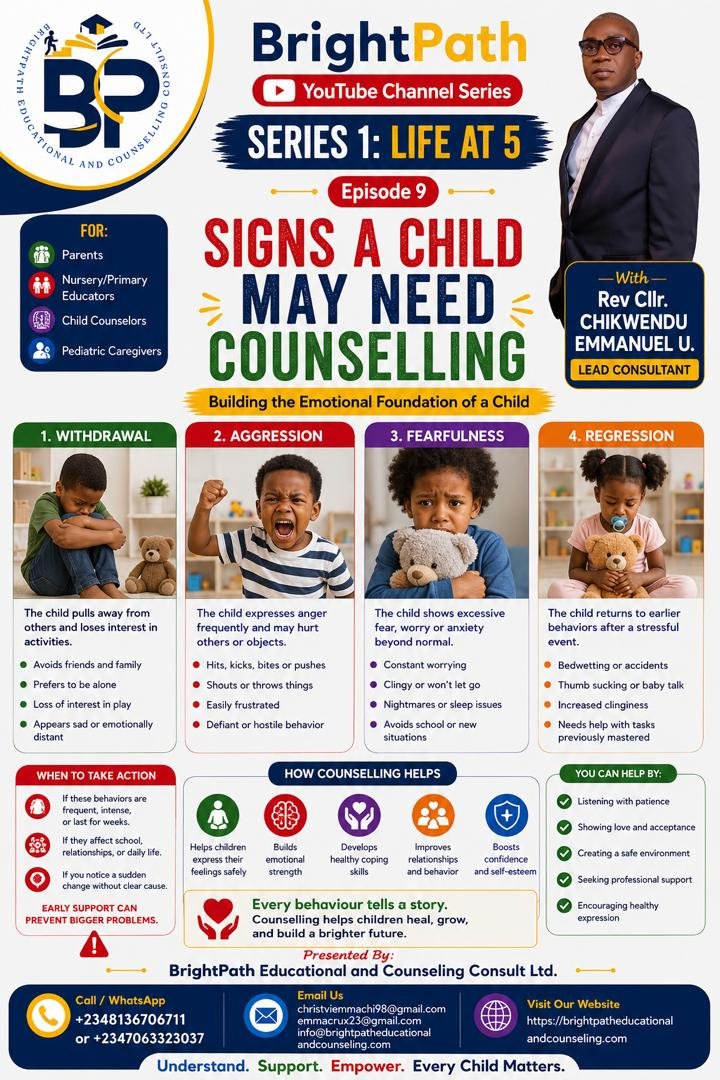
Episode 9: Signs a Child May Need Counseling

Introduction
Every child experiences emotional ups and downs. It is normal for children to occasionally feel sad, angry, fearful, or withdrawn.
However, when certain emotional or behavioral changes become persistent, intense, or begin to interfere with a child’s daily functioning, they may be signs that the child needs additional emotional support.
Many children do not have the vocabulary to say:
“I am hurting emotionally.”
Instead, they communicate distress through their behavior.
Counseling is not only for children with severe problems. It is a supportive process that helps children:
- Understand their feelings
- Express emotions safely
- Develop coping skills
- Improve relationships
- Build resilience
The earlier emotional concerns are identified, the easier it becomes to provide effective support.
- Understanding Emotional Distress in Children
Children often communicate emotional pain differently from adults.
Adults may talk about their feelings.
Children often show their feelings through:
- Behavior changes
- Academic difficulties
- Social withdrawal
- Physical complaints
- Emotional outbursts
Behavior is often a child’s language.
When behavior changes suddenly or significantly, adults should pay attention.
- Withdrawal: When a Child Pulls Away
What is Withdrawal?
Withdrawal occurs when a child begins to:
- Avoid friends
- Avoid family interactions
- Prefer isolation
- Lose interest in favorite activities
- Become unusually quiet
Possible Signs
A child who once enjoyed playing may:
- Stay alone frequently
- Refuse social activities
- Avoid conversations
- Appear emotionally distant
Possible Underlying Causes
Withdrawal may be associated with:
- Anxiety
- Sadness
- Bullying
- Family conflict
- Grief or loss
- Low self-esteem
- Emotional trauma
Why Early Attention Matters
Persistent withdrawal may indicate that a child is struggling emotionally and needs support to process feelings safely.
- Aggression: When Emotional Pain Comes Out as Anger
Understanding Aggression
Aggression may include:
- Hitting
- Kicking
- Biting
- Shouting
- Destroying property
- Frequent hostile behavior
Many adults focus only on stopping aggression.
However, aggression is often a symptom rather than the root problem.
What Aggression May Be Communicating
Sometimes aggression means:
“I feel frustrated.”
“I feel hurt.”
“I don’t know how to express my emotions.”
“I feel powerless.”
Possible Causes
Aggressive behavior may be linked to:
- Emotional distress
- Family stress
- Exposure to violence
- Bullying experiences
- Difficulty regulating emotions
- Unmet emotional needs
Counseling Support
Counseling helps children:
- Identify triggers
- Express emotions appropriately
- Learn self-control strategies
- Develop healthier coping skills
- Fearfulness: When Anxiety Becomes Excessive
Understanding Childhood Fear
Some fears are normal.
Young children may fear:
- Darkness
- Loud noises
- Strangers
- Separation from caregivers
These fears often decrease as children mature.
When Fear May Signal a Problem
Parents and teachers should pay attention when fear becomes:
- Intense
- Persistent
- Excessive
- Disruptive to daily activities
Possible Signs
The child may:
- Worry excessively
- Cling constantly to caregivers
- Avoid school
- Have frequent nightmares
- Cry excessively during separation
- Refuse new experiences
Possible Causes
Fearfulness may result from:
- Anxiety disorders
- Traumatic experiences
- Family instability
- Exposure to frightening events
- Chronic stress
- Regression: When a Child Returns to Earlier Behaviors
What is Regression?
Regression occurs when a child returns to behaviors previously outgrown.
Examples include:
- Bedwetting
- Thumb sucking
- Baby talk
- Excessive clinginess
- Increased dependence
Why Regression Happens
Regression often occurs when children feel overwhelmed or insecure.
Stressful events may include:
- Family conflict
- Divorce
- Relocation
- New sibling arrival
- School changes
- Illness
- Loss of a loved one
What Regression Communicates
Regression may be a child’s way of saying:
“I need comfort.”
“I don’t feel safe.”
“I am struggling to cope.”
- Additional Signs That May Indicate Counseling Is Needed
Parents and educators should also watch for:
Frequent sadness
Extreme mood swings
Persistent low self-esteem
Academic decline
Social difficulties
Frequent physical complaints
Such as headaches or stomach aches without clear medical causes.
Sleep disturbances
Excessive anger
Difficulty concentrating
Loss of interest in previously enjoyed activities
- Why Children Benefit from Counseling
Counseling provides a safe and supportive environment where children can:
- Express feelings freely
- Learn emotional vocabulary
- Build confidence
- Improve coping skills
- Develop resilience
- Strengthen social relationships
- What Counseling Looks Like for Young Children
Child counseling is often different from adult counseling.
Children may communicate through:
Play
Drawing
Storytelling
Creative activities
Games
These approaches help children express emotions in age-appropriate ways.
- The Role of Parents and Teachers
Adults play a vital role in early identification.
Observe Changes
Pay attention to sudden or persistent behavioral shifts.
Listen Without Judgment
Children need adults who listen carefully and respectfully.
Create Emotional Safety
Children should feel safe discussing emotions without fear of punishment or criticism.
Seek Professional Support Early
Early intervention often prevents emotional difficulties from becoming more serious.
- Counseling Insight for Parents and Educators
A child who needs counseling is not a “problem child.”
A child showing emotional distress is often a child asking for help in the only way they know how.
Behavior is communication.
The question is not:
“What is wrong with this child?”
The better question is:
“What might this child be experiencing?”
This perspective encourages empathy and effective support.
Practical Action Steps for Adults
Observe Carefully
Notice patterns rather than isolated incidents.
Communicate Openly
Ask gentle questions about feelings and experiences.
Strengthen Relationships
Provide reassurance, attention, and emotional availability.
Collaborate
Parents, teachers, and counselors should work together.
Seek Professional Help When Needed
Do not wait for problems to become severe.
Conclusion
Children often communicate emotional struggles through behavior rather than words.
Warning signs may include:
- Withdrawal
- Aggression
- Excessive fearfulness
- Regression
When these signs are persistent or significantly affect daily functioning, counseling may provide valuable support.
Early recognition and intervention can help children overcome challenges, build resilience, and develop healthy emotional well-being.
BrightPath Closing Reflection
“Every behavior tells a story. A withdrawn child may be carrying hidden sadness. An aggressive child may be expressing unspoken pain. A fearful child may be struggling with anxiety, while a regressing child may be seeking comfort and security. When adults look beyond the behavior and seek to understand the child’s emotional needs, healing and growth become possible. Sometimes the greatest gift we can give a child is not correction, but compassionate support.”