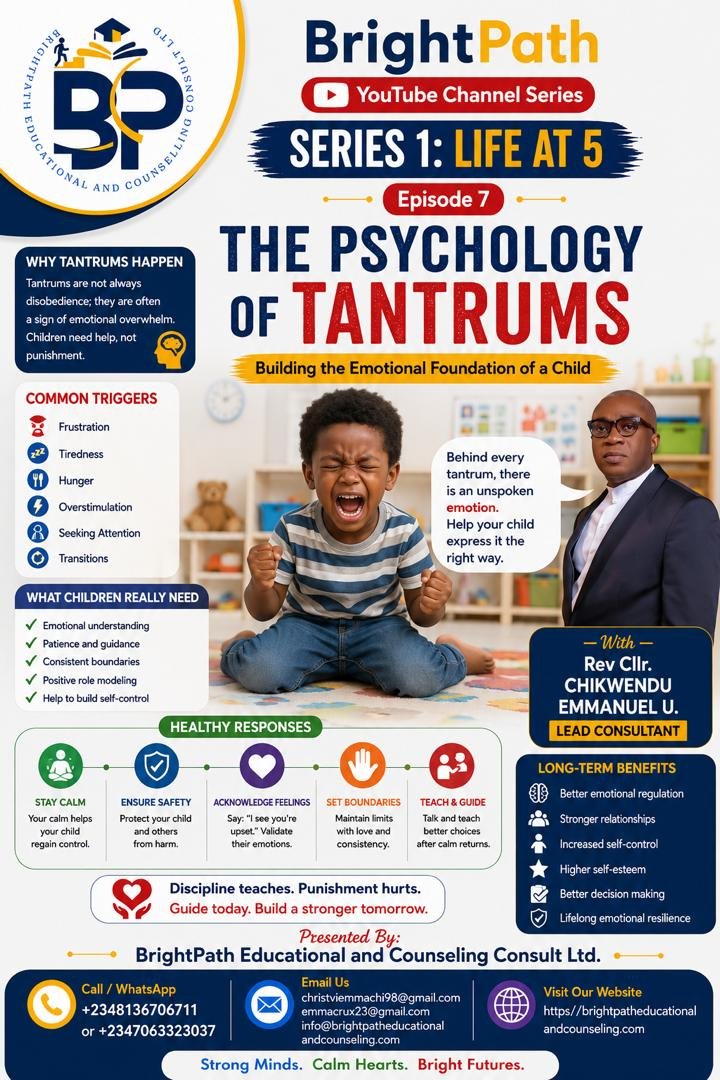
Episode 7: The Psychology of Tantrums

Introduction
Few childhood behaviors frustrate adults more than tantrums.
A child may:
- Cry uncontrollably
- Scream loudly
- Throw objects
- Refuse instructions
- Fall to the floor
- Kick or hit
Many adults immediately assume:
“This child is stubborn.”
However, from a psychological perspective, most tantrums are not acts of deliberate disobedience.
They are often signs of emotional overwhelm.
At age five, children are still learning how to:
- Understand emotions
- Express feelings appropriately
- Manage frustration
- Delay gratification
- Cope with disappointment
Tantrums are often the visible result of emotional skills that are still developing.
Understanding the psychology behind tantrums helps adults respond more effectively and compassionately.
- What Is a Tantrum?
A tantrum is an intense emotional outburst that occurs when a child becomes overwhelmed and loses the ability to regulate emotions effectively.
Tantrums may include:
- Crying
- Yelling
- Screaming
- Hitting
- Throwing things
- Refusing to cooperate
- Physical resistance
Children are not born knowing how to regulate emotions.
Self-regulation develops gradually through guidance, experience, and emotional support.
- Why Do Tantrums Happen?
Emotional Overload
Children often experience emotions more intensely than adults.
What seems minor to an adult may feel enormous to a child.
Examples:
- A broken toy
- A denied request
- Losing a game
- Being told “No”
- Having to stop playing
The child feels powerful emotions but lacks the skills to manage them effectively.
Limited Emotional Vocabulary
Adults may say:
“I’m disappointed.”
A child may not have the words to explain that feeling.
Instead, the child expresses the emotion behaviorally.
The tantrum becomes communication.
Developing Brain Functions
The part of the brain responsible for:
- Impulse control
- Decision-making
- Emotional regulation
is still developing in young children.
This explains why children often react emotionally before thinking logically.
- Common Triggers of Tantrums
Frustration
When children cannot achieve what they want.
Fatigue
Tired children struggle to regulate emotions.
Hunger
Physical discomfort affects emotional control.
Overstimulation
Too much noise, activity, or excitement can overwhelm children.
Attention Seeking
Children may seek connection when emotional needs are unmet.
Transitions
Moving from one activity to another can be difficult.
Examples:
- Leaving the playground
- Turning off the television
- Going to bed
- Understanding Emotional Regulation
What Is Emotional Regulation?
Emotional regulation is the ability to:
- Recognize emotions
- Understand feelings
- Manage emotional reactions appropriately
Young children are still learning these skills.
Adults often expect self-control before teaching it.
Emotional Regulation Is Learned
Children learn emotional regulation through:
- Observation
- Practice
- Guidance
- Supportive relationships
Every tantrum becomes an opportunity to teach emotional skills.
- Discipline vs Punishment
Many adults confuse discipline with punishment.
However, they are not the same.
What Is Punishment?
Punishment focuses on:
- Causing discomfort
- Creating fear
- Controlling behavior
Examples:
- Harsh yelling
- Humiliation
- Threats
- Excessive punishment
Punishment may stop behavior temporarily but often fails to teach emotional skills.
What Is Discipline?
Discipline means:
- Teaching
- Guiding
- Coaching
- Building self-control
Discipline asks:
“What can this child learn from this experience?”
Healthy discipline helps children develop emotional competence.
- Why Harsh Punishment Often Makes Tantrums Worse
When adults respond with:
- Shouting
- Threats
- Anger
- Humiliation
The child’s emotional stress often increases.
The child may become:
- More fearful
- More defensive
- More aggressive
- More emotionally overwhelmed
A dysregulated child cannot easily learn while emotionally flooded.
- Healthy Responses to Tantrums
Stay Calm
Children often borrow emotional cues from adults.
A calm adult helps create emotional stability.
Ensure Safety
Protect the child and others from harm.
Move dangerous objects if necessary.
Acknowledge Feelings
Use statements such as:
- “I can see you’re upset.”
- “You seem frustrated.”
- “I understand that you’re disappointed.”
This does not mean approving inappropriate behavior.
It means recognizing emotions.
Maintain Boundaries
Empathy should not eliminate limits.
For example:
“I understand you’re angry, but I cannot allow hitting.”
Children need both:
- Understanding
- Boundaries
Wait Before Teaching
During intense emotional moments, reasoning often fails.
Once the child becomes calmer:
- Discuss what happened
- Explore feelings
- Practice better responses
- Teaching Emotional Skills After a Tantrum
Help Children Name Feelings
Ask:
- “Were you angry?”
- “Were you disappointed?”
- “Were you frustrated?”
Naming emotions improves emotional awareness.
Teach Alternative Responses
Examples:
Instead of:
- Hitting
Teach:
- Using words
Instead of:
- Screaming
Teach:
- Asking for help
Instead of:
- Throwing objects
Teach:
- Taking deep breaths
- Building Long-Term Emotional Regulation
Children gradually develop emotional control through consistent support.
Helpful Strategies
Predictable Routines
Children feel safer when routines are consistent.
Adequate Sleep
Rest improves emotional stability.
Healthy Nutrition
Physical well-being supports emotional regulation.
Play Opportunities
Play helps children process emotions naturally.
Positive Relationships
Strong emotional connections foster resilience.
- Counseling Insight for Parents and Educators
Behind many tantrums lies an important emotional message:
- “I am frustrated.”
- “I feel overwhelmed.”
- “I need help.”
- “I don’t know how to handle this feeling.”
When adults focus only on stopping the behavior, they may miss the emotional lesson.
When adults respond with guidance and understanding, tantrums become growth opportunities.
Conclusion
Tantrums are not simply acts of misbehavior.
They are often signs that a child is struggling with emotional regulation.
Children need adults who can:
- Stay calm
- Teach emotional skills
- Maintain healthy boundaries
- Offer guidance without humiliation
Discipline should teach children how to manage emotions—not simply punish emotional struggles.
Every tantrum can become an opportunity to build emotional intelligence, self-control, and resilience.
BrightPath Closing Reflection
“A tantrum is often a child’s emotional cry for help, not a declaration of war. When adults respond with patience, understanding, and guidance, they transform emotional chaos into emotional growth. Every calm response teaches a child a powerful lesson: feelings are manageable, and difficult emotions can be handled in healthy ways.”